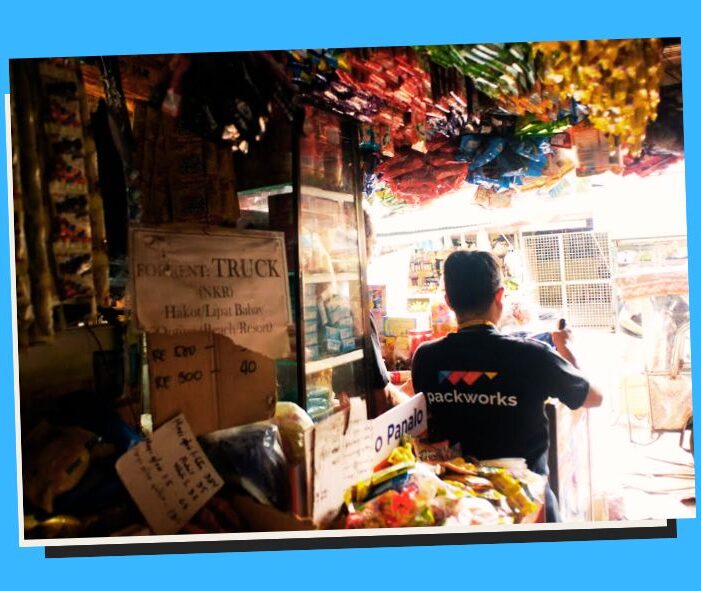
When It Rains, They Sell: Packworks Study Exposes Surprising Sales Trends at Sari-Sari Stores During Natural Calamities
It’s a fact: when a typhoon hits, sari-sari stores step up. Packworks’ latest research uncovers a surprising trend of sales spikes, with one province seeing a staggering 105% increase in gross merchandise value. Dive into this crucial data that informs a more agile supply chain and better prepares communities for future storms.
PRESS RELEASE
Sari-sari stores see sales spikes after record-breaking typhoon season in PHL in 2024 – Packworks study
Manila, Philippines — Amidst the damages brought by a record-breaking typhoon season in the Philippines, sari-sari stores exhibited high resilience and a signal source of supply for neighboring communities affected by storms.
This is the latest insight from Filipino tech startup Packworks.io, which analyzed over a million monthly sales transactions from more than 300,000 sari-sari stores nationwide through its business intelligence platform, Sari IQ.
Packworks researched historical data from 2024 on sari-sari stores in some of the hardest-hit areas in the Philippines. Among those measured were Batangas from Region IV-A, Cagayan and Isabela from Region II, and Albay, Camarines Norte, Camarines Sur, and Catanduanes from Region V.
Data reveals that sari-sari stores in these areas saw an overall 27% increase in average daily gross merchandise value (GMV) and a 50% rise in transactions a month after six typhoons hit between October 23 and November 18.
The year 2024 holds the record for the most decommissioned names in a single season since the Philippine Atmospheric, Geophysical, and Astronomical Services Administration (PAGASA) began the current naming scheme in 2001, with eight typhoon names due to the significant damage and destruction they caused.
These sales trends were driven mainly by the provinces located in the Bicol region, which saw a combined 50% spike during a typhoon and a further 26% increase in average daily GMV after a typhoon hit. The Bicol region, located on the southeastern part of Luzon, is one of the first major landmasses to be hit by typhoons entering the Philippine Area of Responsibility (PAR) and often bears the brunt of a typhoon’s strength, creating an urgent need for supplies and driving increased demand for essential goods from sari-sari stores. Notably, Camarines Norte saw a staggering 105% increase in the average GMV after a typhoon hit.
“These data findings challenge the common belief that micro businesses are less resilient during bad weather conditions. Through presence and grit, our store owners have figured out how to persevere and even positively thrive amid natural calamities, creating real business value and opportunities while aiding in the community’s recovery.” said Packworks Chief Data Officer Andoy Montiel.
Packworks’ data also examined buying habits in sari-sari stores during typhoons compared to before they hit in the analyzed areas. Findings reveal that cigarettes and gin were the top-selling items during typhoons, suggesting a continued demand for these discretionary goods even in times of crisis. Gin saw the highest GMV percentage change, with a median increase of 14% among seven affected provinces, while cigarettes followed with a 12% median increase among six provinces. Meanwhile, easy-to-eat items were also top purchases, with powdered coffee recording a midpoint GMV increase of 10% in six provinces and biscuits a 2% GMV median increase in seven provinces.
There were further shifts in the buying trends after a typhoon hit, as communities began their recovery, notably detergent became one of the top-selling items across five provinces with a 7% GMV share, causing a temporary spike in demand for cleaning supplies for typhoon-stricken households.
“With the uncertainty of climate change, our data analytics asserts the stable role of sari-sari stores as a reliable, responsive, and vital part of the grassroots retail ecosystem during a crisis. True to the idiom: ‘when it rains it pours’ – understanding these just-in-time, on-the-ground realities is key to informing businesses and policymakers with a prepared plan and help realize a more agile supply chain logistics to better serve communities when they need it most,” Packworks Chief Platform Officer Hubert Yap said.
According to PAGASA, an average of 20 tropical cyclones enter PAR each year, with eight to nine typhoons making landfall in the country’s regions. The country is forecast to brace for 7 to 15 tropical cyclones from September 2025 to February 2026.
For info about Sari IQ and to uncover more seasonal data trends in sari-sari stores, you may visit http://packworks.io/ or Packworks’ Facebook page to learn more.
###
OTHER KEY INFO
- Packworks was born in 2018 out of a passion project by founders Bing Tan, Ibba Bernardo, and Hubert Yap, who started as motorbike buddies delivering solar panels to provinces and far-flung places across the country. During their excursions, they saw firsthand the challenges brought by limited access for sari-sari store owners and embarked on developing an application for small store businesses to have a one-app stop for all their needs.
- Launched as a solution for multinational companies with only a handful of sari-sari store partners, Packworks has rapidly expanded as a B2B platform that enables growth and success throughout all stakeholders in the supply chain ecosystem, from small sari-sari store owners to wholesalers, distributors, and renowned FMCG companies and brands. With about 75% of sari-sari stores owned by women, Packworks also works to empower female entrepreneurs.
ABOUT PACKWORKS
Packworks.io is a startup company that provides a business-to-business (B2B) platform that is easy to use, has low bandwidth, and has a light footprint that will allow sari-sari store owners to become more efficient in managing their business. Founded in 2018 and started as a solution for multinational companies in the Philippines to connect with neighborhood stores, the platform has now transformed into a way out of poverty for the millions of sari-sari store owners across the Philippines. Packworks empowers the sari-sari stores through scalable and accessible technology, with its team composed of dedicated developers, programmers, and technicians that work to put the power back into the hands of the people at the heart of Filipino communities by providing them with digital opportunities previously only available to big companies. By bringing technology-based solutions to one million Filipino sari-sari stores, Packworks is driving toward a more progressive, connected, and inclusive Philippines.
Benefits
- Challenges a common misconception that micro-businesses fail during natural disasters, highlighting their resilience instead.
- Provides data-backed evidence (27% GMV increase, 50% transaction rise) of sari-sari stores’ economic resilience.
- Informs policymakers and businesses on the crucial role of sari-sari stores as a reliable supply chain during crises.
- Highlights the positive socio-economic impact of sari-sari stores in aiding community recovery.
- Uncovers specific consumer behaviors during and after typhoons, offering valuable market insights (e.g., increased sales of cigarettes, gin, and detergent).
- Reinforces Packworks’ mission to empower sari-sari store owners and validate their importance to the Philippine economy.
- Showcases the power of data analytics from a grassroots level (Sari IQ) in providing real-time, actionable insights.
- Serves as a call to action for businesses to better prepare their supply chain logistics for future calamities.
- Adds to the conversation about climate change’s impact on local economies and the importance of on-the-ground resilience.
- Positions sari-sari stores as a source of business value and opportunity, not just a fragile enterprise.
Insights
- Micro-businesses can exhibit high levels of resilience and even thrive during natural disasters, contrary to popular belief.
- The sales spikes in sari-sari stores after a typhoon season underscore their role as a just-in-time, on-the-ground supply source for affected communities.
- The Bicol region’s data (50% spike during, 26% after) demonstrates the urgent demand for goods in areas that bear the brunt of storms.
- Consumer purchasing habits shift predictably during and after a calamity, with immediate needs (food, water) and discretionary items (gin, cigarettes) spiking during the storm, and recovery-related goods (detergent) rising afterward.
- The significant increase in transactions (50%) indicates that people rely on sari-sari stores for smaller, more frequent purchases in the aftermath of a disaster.
- Packworks’ Sari IQ platform provides a unique perspective on grassroots retail realities that are often missed by broader macroeconomic reports.
- The study confirms that sari-sari stores are vital components of the grassroots retail ecosystem, serving as community hubs that are responsive to immediate local needs.
- The data can be used to inform and create more agile supply chains and disaster preparedness plans for both businesses and government agencies.
- The “grit and perseverance” of sari-sari store owners enable them to create real business value even in the face of significant challenges.
- The study provides a concrete case study of how a localized, data-driven approach can uncover critical insights and support a more resilient nation.
Conclusion
Packworks’ latest study provides a compelling and data-driven account of the extraordinary resilience of sari-sari stores in the face of the 2024 record-breaking typhoon season. By analyzing millions of transactions, the company has proven that these micro-businesses are not only capable of withstanding natural disasters but also act as a crucial lifeline and a reliable source of supply for their communities in the aftermath. The insights gleaned from this research challenge conventional wisdom and provide a critical roadmap for businesses and policymakers to develop more agile supply chains and better support these essential pillars of the Philippine grassroots economy.
Link Resources
- Packworks Official Website: http://packworks.io/
- Packworks Facebook Page: https://www.facebook.com/thepackworks/
- Sari IQ Platform for Brands:
- Packworks Newsroom (for other studies): https://packworks.io/media-portal/
- Contact Packworks for media inquiries:
media@packworks.io
Key Phrases
- Sari-sari stores typhoon sales
- Packworks study on sari-sari stores
- Micro-business resilience
- Typhoon season Philippines 2024
- Sari IQ business intelligence
- On-the-ground retail trends
- Philippine supply chain logistics
- Community recovery after typhoons
- Grassroots retail ecosystem
- Batangas, Cagayan, Isabela, Bicol sales data
Best Hashtags
- #SariSariStores
- #PackworksStudy
- #TyphoonResilience
- #PhilippineEconomy
- #MicroBusiness
- #CommunityHubs
- #DisasterPreparedness
- #SariIQ
- #DataAnalytics
- #PHClimate

Oliver Bugarin – A blog writer with over a decade of experience in WordPress website creation and management, and creating articles on lifestyle, travel, technology, business, finance, and wellness. He is known for producing clear, engaging articles that resonate with readers and add value to any blog or website.
Contact him for collaborations or content writing opportunities. Facebook – LinkedIn
.
Save/Share this story with QR CODE
Disclaimer
This article is for informational purposes only and does not constitute endorsement of any specific technologies or methodologies and financial advice or endorsement of any specific products or services.
Contact Lead Media News
📩 Feel free to Contact Lead Media News for suggestions, collaborations, reviews, or anything else.





