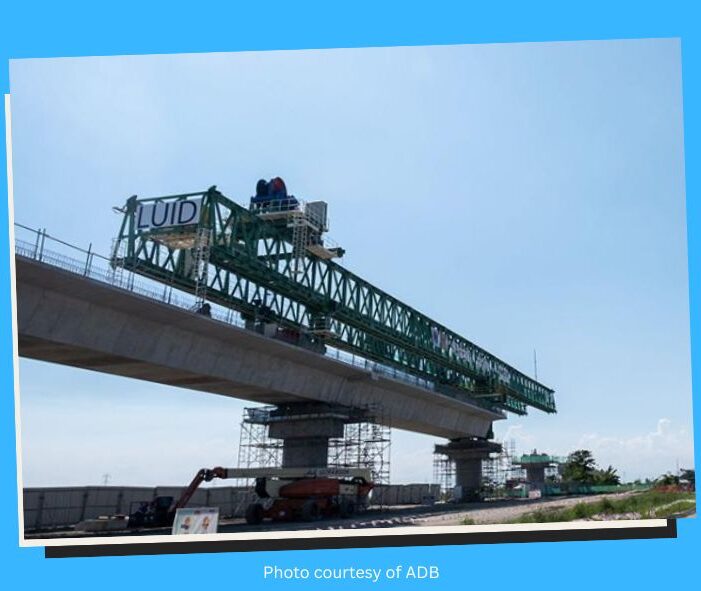
Malolos-Clark Railway Project: A Game Changer for Transport in Luzon
Discover how a $1.45B ADB loan revolutionizes transportation in the Philippines.
🚆 The Philippines Secures $1.45-B ADB Loan for Malolos-Clark Railway: What You Need to Know
The Philippines has taken a bold leap toward enhancing its transportation landscape with a fresh injection of funding from the Asian Development Bank (ADB). On April 10, ADB formally announced the approval of USD 1.45 billion in financing for the Malolos-Clark Railway Project (MCRP), a significant component of the country’s North-South Commuter Railway (NSCR) initiative.
This project isn’t just about tracks and trains. It’s a transformative blueprint that promises job creation, environmental sustainability, and more efficient travel across Luzon. With over 53 kilometers of railway connecting Malolos in Bulacan to Clark in Pampanga, the MCRP is expected to revolutionize the daily commute for thousands of Filipinos and support the nation’s broader development agenda.
🌏 Backed by ADB: A Game-Changing Investment
According to ADB Philippines Country Director Pavit Ramachandran, this railway initiative is one of the largest projects ADB has ever financed in the Asia-Pacific. It’s a testament to the bank’s confidence in the Philippine government’s infrastructure vision and its push for inclusive economic growth.
ADB had earlier provided $1.3 billion in 2019 as the first tranche for the MCRP. This second tranche completes the funding package, allowing full implementation of the ambitious project.
🚄 Malolos-Clark Railway: A Key Segment of NSCR
The MCRP forms a core part of the 163-kilometer North-South Commuter Railway (NSCR) system, which stretches from New Clark City to Calamba in Laguna. Once completed, it will:
- Cut travel time from Clark to Manila by more than half
- Reduce congestion on major highways
- Promote environmentally friendly transport solutions
- Connect key economic zones and tourism hubs
💼 More ADB Projects in the Pipeline
In addition to MCRP, ADB is gearing up to provide up to $4 billion in loans to the Philippines this year alone. Other major pipeline projects include:
- Walang Gutom (Zero Hunger) Program – $400M
- Marine Ecosystems for Blue Economy Development – $400M
- ACCESS UHC (Healthcare Expansion) – $300M
These initiatives reflect ADB’s multi-sectoral approach to improving food security, environmental management, and public health systems in the Philippines.
✅ Tips for Understanding the Malolos-Clark Railway Project
- Follow ADB updates: ADB regularly publishes project briefs and press releases; stay informed.
- Study the NSCR master plan: This offers a complete view of how MCRP fits into the big picture.
- Understand its impact on real estate: Proximity to railway stations can increase property values.
- Watch for job openings: Infrastructure projects often lead to employment booms in construction and engineering.
- Track environmental assessments: The project is green-oriented; knowing the mitigation strategies matters.
- Explore commuter benefits: Quicker transit times and reduced traffic offer personal and economic value.
- Learn about public-private synergies: Some NSCR segments may be run in partnership with private firms.
- Identify transport hubs: Knowing where interchanges are helps in urban mobility planning.
- Engage in consultations: Public consultations often shape implementation, citizen input counts.
- Monitor local government integration: Cities and municipalities will adjust urban planning around the railway.
💡 Insights Into the MCRP and ADB’s Support
- Strategic Placement: MCRP links major economic zones and international gateways like Clark International Airport.
- Climate-Friendly Design: The railway reduces vehicle use, lowering carbon emissions.
- ADB’s Confidence: ADB’s large loan underscores strong institutional trust in the country’s infrastructure agenda.
- Regional Boost: Pampanga and Bulacan will become stronger economic corridors.
- Inclusive Growth: Projects like this narrow the gap between urban and rural access to jobs and services.
- Multimodal Integration: MCRP will connect seamlessly with buses, jeepneys, and other urban transport.
- Time Efficiency: Travel time reduction promotes productivity and quality of life.
- International Standards: Engineering and design standards meet global benchmarks.
- Replicable Model: MCRP sets a precedent for future infrastructure financing in the Philippines.
- Technology Leap: It introduces high-speed rail components and advanced traffic management systems.
❓ Frequently Asked Questions (FAQs)
- What is the Malolos-Clark Railway Project?
- It’s a 53.1-kilometer railway line connecting Bulacan to Pampanga, part of the North-South Commuter Railway.
- Who is funding the project?
- The Asian Development Bank (ADB) is providing $2.75 billion in financing in two tranches.
- What is the total project cost?
- While ADB covers a major portion, the full NSCR system costs approximately ₱777.5 billion (USD 14 billion).
- When is the project expected to be completed?
- Major construction phases are underway, with partial operations targeted around 2026-2028.
- What are the benefits for commuters?
- Faster travel, reduced congestion, and better transport connectivity.
- Is the project environmentally sustainable?
- Yes. It supports reduced vehicle emissions and includes climate-resilient infrastructure.
- What cities will be connected by MCRP?
- Malolos, Angeles City, Mabalacat, San Fernando, and Clark Freeport Zone.
- What is NSCR?
- The North-South Commuter Railway, a mega railway project spanning Central to Southern Luzon.
- Are there job opportunities related to the MCRP?
- Yes. Thousands of jobs will be created during and after construction.
- How is this different from the MRT/LRT?
- NSCR/MCRP is a long-distance, high-speed rail designed for regional connectivity, not just urban transit.
🧭 Conclusion
The Philippines is entering a new era of infrastructure development with the Malolos-Clark Railway Project at its forefront. Backed by significant funding from the Asian Development Bank, this initiative is more than a transport solution; it’s a vehicle for nation-building, environmental protection, and economic resurgence.
By bridging key provinces to Metro Manila, reducing travel times, and easing congestion, the MCRP sets the stage for a smarter, greener, and more interconnected future. With billions more lined up for healthcare, hunger alleviation, and marine conservation, the Philippines is clearly building beyond railroads; it’s laying the groundwork for resilient and inclusive national development.
🔗 Link Resources
- ADB News Release on MCRP
- Philippine DOTr – Railway Projects
- ADB Project Tracker
- NSCR Project Overview
- NEDA Infrastructure Program
- ADB Transport Sector Operations
- Climate Impact Reports by ADB
- Department of Finance – External Financing
🔑 Key Phrases
- ADB loans for Philippine railways
- Malolos-Clark Railway Project funding
- North-South Commuter Railway development
- Philippine mass transport modernization
- Infrastructure investment in Luzon
- Eco-friendly railway systems
- Public transport transformation
- Commuter railway financing in Asia
- ADB infrastructure partnerships
- Luzon inter-city transport improvements
🏷️ 10 Trending Hashtags
- #MalolosClarkRailway
- #ADBPhilippines
- #BuildBuildBuild
- #RailwayRevolutionPH
- #NSCR
- #SustainableTransport
- #GreenMobility
- #InclusiveDevelopment
- #FutureOfTransport
- #ADBInvestment

Oliver Bugarin – A blog writer with over a decade of experience in WordPress website creation and management, and creating articles on lifestyle, travel, technology, business, finance, and wellness. He is known for producing clear, engaging articles that resonate with readers and add value to any blog or website.
Contact him for collaborations or content writing opportunities. Facebook – LinkedIn
.
Save/Share this story with QR CODE
Disclaimer
This article is for informational purposes only and does not constitute endorsement of any specific technologies or methodologies and financial advice or endorsement of any specific products or services.
Contact Lead Media News
📩 Feel free to Contact Lead Media News for suggestions, collaborations, reviews, or anything else.





