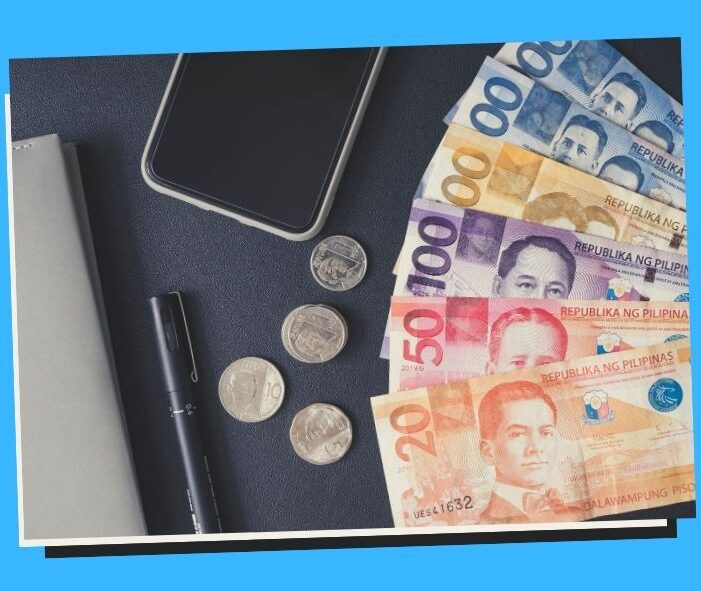
Time Deposit vs. Savings Account in the Philippines: Where Should You Grow Your Money?
Compare time deposits and savings accounts in the Philippines. Learn how to maximize your interest earnings and make the best choice for your hard-earned pesos.
Smart Money Moves: Should You Lock Your Cash in a Time Deposit or Keep It Liquid?
In an era marked by shifting economic landscapes, rising inflation, and rapid digital transformation, managing your personal finances effectively has become a critical skill for every Filipino. One of the most fundamental dilemmas that savers face when trying to grow their hard-earned pesos is deciding where to park their money. Should you open a traditional savings account, or should you lock your funds into a time deposit?
At Lead Media News, we are deeply committed to shifting the national narrative away from financial uncertainty and toward hope, progress, and possibility. We believe that providing truth and clarity on everyday financial instruments is essential to building long-term trust and empowering individuals to make informed choices. Selecting the right banking vehicle is not just about keeping your cash safe; it is about choosing a strategy that aligns perfectly with your lifestyle, your financial timeline, and your ultimate goals. Whether you are a young professional in Manila building your very first emergency fund or an Overseas Filipino Worker (OFW) looking to secure a safe return on your remittances, understanding the nuances between these two foundational banking products will set the stage for your financial empowerment.
How to Choose Between a Time Deposit and a Savings Account
Navigating the local banking system requires a structured approach to ensure you place your money in the vehicle that serves you best. Here is a step-by-step process to help you analyze your situation and make the right decision.
Define Your Financial Goals and Timeline
Before looking at any bank products, identify what you are saving for. If you are building an emergency fund or saving for a trip next month, you need immediate access to your cash. If you are saving for a wedding in two years or a down payment on a house, you can afford to let your money sit untouched.
Assess Your Need for Liquidity
Liquidity refers to how quickly and easily you can convert an asset into cash without losing value. A regular savings account offers maximum liquidity through ATM withdrawals and online transfers. A time deposit locks your money away for a specific period, meaning you cannot easily access it without facing pre-termination penalties.
Compare Current Interest Rates Across Institutions
Do your research on what traditional and digital banks are currently offering. Traditional brick-and-mortar banks generally offer lower interest rates on regular savings accounts, while digital banks have introduced highly competitive rates. Time deposits usually offer a fixed, higher rate compared to traditional savings, but they might be outpaced by aggressive promotional digital savings rates.
Evaluate the Minimum Deposit and Maintaining Balance Requirements
Every bank product has its own entry barriers. Traditional savings accounts might require a low initial deposit of 100 to 5,000 Pesos, while traditional time deposits often demand a higher starting amount, such as 10,000 to 50,000 Pesos. Ensure your capital meets these requirements without draining your daily operational cash.
Analyze the Penalty Structures for Early Withdrawal
Look closely at the fine print of a time deposit contract. If an emergency arises and you need to break the bond before the maturity date, what will it cost you? Banks typically charge a pre-termination penalty, which can eat into your accrued interest and sometimes even a small portion of your principal amount.
Check for PDIC Insurance and Security
Ensure the financial institution you select is supervised by the Bangko Sentral ng Pilipinas (BSP) and insured by the Philippine Deposit Insurance Corporation (PDIC). This guarantees that your deposits are legally protected up to 500,000 Pesos per depositor, per bank, giving you peace of mind regardless of whether you choose a savings account or a time deposit.
Consider the Impact of Taxes on Your Earnings
Both savings accounts and time deposits in the Philippines are subject to a 20 percent final withholding tax on interest earned. Factor this tax into your calculations when projecting your net returns, as the advertised interest rate is always gross of tax.
Incorporate Digital and Traditional Banking Tools
Determine how tech-savvy you are and how much convenience you require. If you value features like digital payment integrations, quick fund transfers through InstaPay, or automated budgeting tools, a modern savings account might be ideal. If you prefer a “set and forget” approach that removes temptation, a time deposit is an excellent structural tool.
Diversify Your Savings Portfolio
You do not have to choose just one. A professional financial strategy often involves a hybrid approach. You can place your immediate living expenses and emergency fund in a liquid savings account, while placing your medium-term savings into a time deposit to secure a guaranteed yield.
Review and Rebalance Periodically
The financial market is dynamic. Set a schedule to review your banking setup every six months or whenever a time deposit matures. This allows you to check if there are better promotional rates available or if your personal financial timeline has shifted, ensuring your money is always working as hard as possible for you.
Benefits
- Provides guaranteed safety for your capital through PDIC insurance up to 500,000 Pesos.
- Helps protect your money from impulsive spending by adding structural barriers.
- Allows for predictable financial planning due to fixed interest rates in time deposits.
- Offers immediate access to funds for daily needs and emergencies via savings accounts.
- Enables participation in the growing digital economy through online banking features.
- Helps combat the eroding effects of inflation on cash savings.
- Establishes a track record with a bank, making future loan applications easier.
- Fosters personal discipline and financial literacy through regular habit tracking.
- Offers a low-risk entryway into the world of investing for beginners.
- Delivers passive income through interest payouts with zero effort required.
Costing
While opening a bank account is technically free, there are structural costs and requirements to keep in mind. Traditional savings accounts require a minimum balance to avoid monthly penalties (usually around 300 Pesos per month if the account falls below the minimum limit). For time deposits, the “cost” is the opportunity cost of locking up your funds, alongside the pre-termination fees mentioned earlier. Additionally, a 20 percent final withholding tax is automatically deducted from your interest earnings by the bank before payout. Digital banks may also pass on small transactional fees for fund transfers to other networks, though many maintain zero-fee policies for basic account upkeep.
Pros and Cons
Pros
- High liquidity with savings accounts allows for instant emergency cash.
- Fixed interest rates on time deposits insulate you from market volatility.
- Low initial deposits make savings accounts highly accessible to all Filipinos.
- Time deposits eliminate the temptation to spend money earmarked for future goals.
- Digital bank savings accounts offer highly competitive interest rates.
- Automatic interest compounding occurs regularly in most savings structures.
- Convenient bill payment and online shopping integrations via savings apps.
- Clear digital tracking allows you to monitor your net worth easily.
- Zero investment risk of losing your principal amount compared to stocks.
- Promotes a culture of saving and long-term financial security within the family.
Cons
- Low interest rates on traditional savings accounts fail to beat high inflation.
- Time deposits lack liquidity, making funds inaccessible during sudden crises.
- Pre-termination fees can wipe out potential interest gains on a time deposit.
- Maintaining balances can tie up small amounts of operational capital.
- The 20 percent withholding tax reduces the advertised net profitability.
- Digital banks require stable internet access, which can be an issue in rural areas.
- Time deposits do not allow you to add funds midway through the term.
- Traditional branch visits for opening some time deposits can take several hours.
- Low yield compared to higher-risk instruments like mutual funds or equities.
- Inactivity or dormancy fees can apply if an account is left unused for years.
Case Studies
- A virtual assistant in Quezon City uses a high-yield digital savings account to store her three-month emergency fund, ensuring she can withdraw it instantly via a debit card if she loses a client.
- An OFW based in Hong Kong places 100,000 Pesos of his remittances into a 5-year tax-exempt time deposit at a traditional bank to fund his child’s high school tuition down the line.
- A call center professional in Cebu utilizes a hybrid strategy by putting her monthly salary into a regular savings account for bills, while automatically transferring 5,000 Pesos a month into a separate online pocket account.
- A small business owner in Davao locks his excess seasonal profits into a short-term 90-day time deposit, earning a guaranteed return while he waits for the next inventory cycle to begin.
- A fresh graduate in Iloilo opens a zero-maintenance-balance digital savings account to build up his very first 10,000 Pesos without worrying about monthly fees.
- A retired teacher in Pangasinan moves her lump-sum retirement payout into a high-rate time deposit, using the regular quarterly interest distributions to cover her monthly maintenance medication.
- A married couple in Laguna uses a joint savings account with dual ATM access to manage their shared household expenses, groceries, and utility bills smoothly.
- An entrepreneur in Pampanga breaks his time deposit early due to an urgent family medical emergency, accepting a pre-termination fee because he lacked a separate liquid emergency fund.
- A graphic designer in Bacolod leaves her funds in an old savings account that fell below the minimum balance, resulting in monthly fees that slowly reduced her principal over a year.
- A tech-savvy student in Cagayan de Oro maximizes a promotional digital bank campaign that offers 6 percent interest on savings, outperforming the traditional time deposit options in his area.
Key Takeaways
- Savings accounts offer top-tier flexibility, making them perfect for daily transactions.
- Time deposits act as a secure financial shield, guarding specific funds from impulsive spending.
- Higher interest rates usually require sacrificing immediate access to your money.
- High-yield digital banks have dramatically disrupted traditional saving structures in the Philippines.
- Protecting your capital from inflation requires seeking out the highest net interest rates.
- A 20 percent final withholding tax applies to interest earned on both account types.
- An emergency fund belongs in a highly liquid savings account, not a locked time deposit.
- PDIC insurance provides a safety blanket up to 500,000 Pesos for both financial vehicles.
- Combining both options allows you to build a resilient, balanced personal cash reserves strategy.
- Consistently analyzing your timelines ensures your cash is parked in the most efficient vehicle.
Frequently Asked Questions
Can I add more money to an existing time deposit?
No, once a time deposit is opened and locked, you cannot add additional funds to that specific account. You would need to open a new time deposit contract for any extra capital.
What happens if I withdraw my time deposit money before the maturity date?
You will be charged a pre-termination penalty by the bank, which usually dramatically reduces the interest you earn and can sometimes impact your principal.
Are online or digital banks safe for time deposits and savings?
Yes, as long as the digital bank is fully licensed and supervised by the Bangko Sentral ng Pilipinas and insured by the PDIC.
How often is interest credited to a regular savings account?
In most traditional Philippine banks, interest is calculated daily and credited to your account on a monthly or quarterly basis.
Is there a minimum amount required to open a time deposit? Yes, traditional banks typically require at least 10,000 to 50,000 Pesos, though some newer digital banking platforms allow entry for much lower amounts.
What is the final withholding tax on bank interest?
Under the Philippine tax code, a final withholding tax of 20 percent is automatically deducted from the interest income generated by your deposits.
Can a savings account be closed by the bank automatically?
Yes, if your account balance falls below the required minimum balance and remains inactive for a long period, it can become dormant and eventually close.
Which option is better for an emergency fund?
A savings account is far superior for an emergency fund because you need immediate, penalty-free access to your cash during a crisis.
Are there tax-exempt time deposits in the Philippines?
Yes, time deposits with a holding term of five years or longer offered by individual banks are generally exempt from the 20 percent final withholding tax for individual savers.
Can I open multiple savings accounts and time deposits at the same bank?
Yes, you can hold multiple accounts under your name, but remember that the PDIC insurance coverage cap remains a total of 500,000 Pesos across all accounts in that specific bank.
Conclusion
Choosing between a time deposit and a savings account does not have to be a rigid, either-or decision. Instead, it should be a strategic calculation based on your personal financial timeline, your need for liquidity, and your savings goals. By recognizing that savings accounts provide the ultimate operational flexibility while time deposits offer structured security and guaranteed returns, you can craft a balanced approach that serves your life perfectly. Let us move past passive saving habits and embrace intentional wealth management. By choosing the right vehicle for your pesos today, you are actively leading your home with light and writing a more prosperous financial chapter for your future self. ☀️
Link Resources
- Bangko Sentral ng Pilipinas (BSP): https://www.bsp.gov.ph
- Philippine Deposit Insurance Corporation (PDIC): https://www.pdic.gov.ph
- National Tax Research Center Philippines: https://www.ntrc.gov.ph
- Department of Finance Philippines: https://www.dof.gov.ph
- Credit Information Corporation: https://www.creditinfo.gov.ph
Key Phrases
- Time deposit vs savings account Philippines
- High yield savings accounts for Filipinos
- Managing emergency funds in Philippine banks
- Traditional banking vs digital banking PH
- Maximizing interest earnings on Filipino pesos
- PDIC insurance coverage for bank deposits
- Pre-termination penalties on time deposits
- Financial literacy tips for Filipino professionals
- Low risk investment options in the Philippines
- Smart money management for local savers
Best Hashtags
#PersonalFinancePH #PinoySaving #FinancialLiteracy #TimeDepositPH #SavingsAccount #DigitalBankingPH #GrowYourPesos #BayanihanFinances #SmartSaving #FinancialFreedomPH

Oliver Bugarin – A blog writer with over a decade of experience in WordPress website creation and management, and creating articles on lifestyle, travel, technology, business, finance, and wellness. He is known for producing clear, engaging articles that resonate with readers and add value to any blog or website.
Contact him for collaborations or content writing opportunities. Facebook – LinkedIn
.
Save/Share this story with QR CODE
Disclaimer
This article is for informational purposes only and does not constitute endorsement of any specific technologies or methodologies and financial advice or endorsement of any specific products or services.
Contact Lead Media News
📩 Feel free to Contact Lead Media News for suggestions, collaborations, reviews, or anything else.





