Stitching Futures: DOST-PTRI Launches TELACon 2026 to Revolutionize the Philippine Textile Industry
The future of Philippine fashion isn’t just about style—it’s about science. DOST-PTRI’s TELACon 2026 is bringing together the brightest minds in tech, culture, and sustainability to redefine what “Telang Pinoy” can do for the world. Discover how we’re stitching innovation directly into the fabric of our economy.
PRESS RELEASE
DOST-PTRI Hosts TELACon 2026 to Stitch Together Innovation, Sustainability, and Culture for the Future of Telang Pinoy
Pasay City, Philippines – As part of its continuing, year-on-year efforts to strengthen the Philippine textile sector, the Department of Science and Technology–Philippine Textile Research Institute (DOST-PTRI) hosts the National Textile Convention, also known as TELACon, from January 27-29, 2026 at the Philippine International Convention Center (PICC) in Pasay City, stitching together a more unified, innovative, and sustainable textile economy for the future of Telang Pinoy.
The three-day convention—a centerpiece of the annual Philippine Tropical Fabrics (PTF) Month—serves as a premier gathering for textile innovators, industry leaders, researchers, creatives, and policymakers. Under the theme “Stitching Futures,” TELACon 2026 aims to shape an inclusive and globally competitive future for the Philippine textile industry and its allied sectors.
“Stitching Futures highlights the art and science of connecting diverse elements into a unified whole and brings to life the DOST’s vision of making science tangible for Filipinos through the clothes they wear every day,” said DOST-PTRI Director Dr. Julius L. Leaño, Jr.
He added, “Like stitches joining separate pieces of fabric, our work in the textile sector brings together different ideas, disciplines, and perspectives to achieve stronger, more impactful results. Each stitch symbolizes the collaborations and partnerships that sustain and advance the industry, creating patterns that tell stories of innovation, sustainability, inclusivity, and shared growth.”
Sustainability, Culture, and the Carbon Economy: From Labs to Livelihood
The opening day of TELACon focused on advancing sustainability, cultural preservation, and inclusive development. Key topics, including the “TextilePH in Cultural Diplomacy”, “Textile Academy”, “BARMM Textiles”, and “SusTELAbility”–highlighted the evolution of Philippine fabrics into powerful tools of diplomacy that open economic, academic, and political doors on the global stage.
importance of turning scientific innovation into tangible drivers of economic growth and community development. Anchored on the department’s Three-Horizon Science, Technology, and Innovation (STI) Economic Strategy, he explained how the framework supports the transformation of micro, small, and medium enterprises (MSMEs), accelerates the commercialization of textile research and development, and fosters sector-wide growth through emerging technologies. He further stressed that this approach strengthens the global competitiveness of the Philippine textile industry while ensuring that innovation drives inclusive economic development, cultural preservation, and environmental sustainability.
This vision was translated into action through the KatHABI Textile Innovation Exposition, which showcases new textile products and fabrics crafted from natural fibers using locally developed technologies. The exposition brings together weavers, uniform makers, textile and garment manufacturers, shoemakers, and embroiderers from across the country. Attendees can explore high-quality, locally made products while gaining professional insights from industry experts.
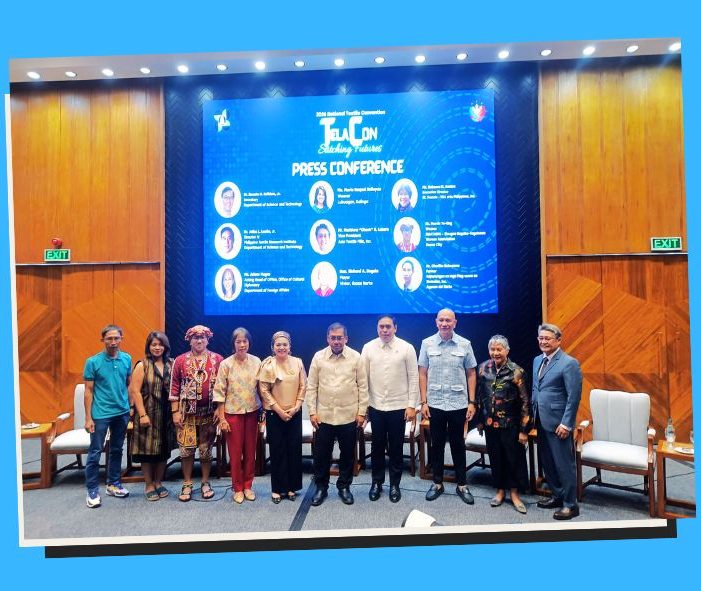
Following the opening, a press conference was held to discuss the roadmap for the industry’s modernization, during which DOST-PTRI reaffirmed the government’s commitment to promoting the use of Philippine Tropical Fabrics (PTF) across the public and private sectors.
During the press briefing, key discussions highlighted how local textiles support national priorities such as sustainability, cultural preservation, and inclusive economic development, while also strengthening livelihoods for Filipino weavers, manufacturers, designers, and innovators.
Speakers further emphasized that PTF is playing a growing role in climate action through circular economy practices, responsible production, and upcycling, positioning local textiles as both cultural assets and practical solutions to modern environmental challenges.
They also underscored how continued investment in research, innovation, and multi-sector collaboration enables local textiles to contribute meaningfully to economic resilience and international market presence, reinforcing the sector’s relevance beyond traditional applications.
Furthermore, sessions centered on the urban economy and upcycling, positioning Telang Pinoy not just as a cultural product but as a solution to climate challenges. These discussions underscored how local fabrics serve as both economic drivers and political bridge-builders, strengthening the country’s role in the global circular economy.
Focus on People, Livelihoods, Culture, and Security
The second day of TELACon 2026 turns the spotlight on the people and communities behind the Telang Pinoy industry. The day opens with conversations on human capacity development, looking at how schools, universities, and technical-vocational institutions can work more closely together to better prepare the next generation of textile professionals. These discussions will also help shape the Philippine Skills Framework for Textiles and Wearables.
The conversation then moves to sustainable livelihood development, where textiles are explored as a pathway to entrepreneurship, regional growth, and more inclusive economic opportunities, especially for communities rooted in traditional production and craft.
In the afternoon, attention shifts to cultural property protection, with discussions on how indigenous weaves can be protected, respected, and fairly used as global interest continues to grow. This is followed by sessions on human security and defense, highlighting locally developed textile innovations used in protective gear, medical applications, and public safety.
The program concludes with a Regional Textile Innovation Stakeholders Meeting, uniting partners from across the country to exchange insights, align priorities, and foster ongoing collaboration.
Expanding Markets and Showcasing Innovation
The last day of the convention looks outward, focusing on how PTF can move beyond their traditional role in government uniforms and into everyday life. Industry leaders, designers, manufacturers, and policymakers will come together to explore how these locally sourced fibres can find a place in mainstream fashion, lifestyle products, and even technical applications.
The convention then builds toward its finale with the KatHABI Textile Innovation Fashion Show, where reimagined government and officewear sit alongside contemporary designs rooted in Filipino heritage and craftsmanship. The program also marks the launch of the DOST-PTRI Diamond Anniversary, celebrating decades of research, service, and innovation in support of the country’s textile industry.
As TELACon 2026 unfolds, the convention continues to serve as a platform for dialogue, collaboration, and innovation, stitching together policy, people, culture, and technology to shape a sustainable and inclusive future for Telang Pinoy.
Moreover, TELACon 2026 reaffirmed the government’s commitment to promoting the use of PTF while supporting Filipino weavers, manufacturers, designers, and innovators. The convention aims to highlight how local textiles contribute to vital national goals, including sustainability, cultural preservation, and inclusive economic development.
For more information about TELACon 2026, visit https://www.ptri.dost.gov.ph and https://www.facebook.com/ptri.dost.
###
ABOUT THE PHILIPPINE TEXTILE RESEARCH INSTITUTE
The Philippine Textile Research Institute (PTRI) is the premier textile research and development arm of the Department of Science and Technology (DOST), focused on advancing the Philippine textile industry through research, development, and innovation. With a commitment to providing sustainable, eco-friendly, and globally competitive solutions, DOST-PTRI spearheads initiatives in textile technology, fiber production, and product development, supporting local industries and enhancing the country’s presence in textiles.
For more information, visit https://www.ptri.dost.gov.ph/ and the official Facebook page.
Benefits
- Economic Empowerment: Drives growth for MSMEs by accelerating the commercialization of textile research and development.
- Environmental Sustainability: Promotes circular economy practices, responsible production, and the use of eco-friendly natural fibers.
- Cultural Preservation: Protects and respects indigenous weaves while ensuring they are fairly used in the global market.
- Global Competitiveness: Positions Philippine Tropical Fabrics (PTF) as high-value assets in the international textile and fashion arena.
- Workforce Development: Helps shape the Philippine Skills Framework for Textiles and Wearables, preparing the next generation of professionals.
- Innovation Access: Provides industry players with direct exposure to locally developed technologies and fiber production techniques.
- Diplomatic Leverage: Highlights “TextilePH in Cultural Diplomacy,” using fabric as a tool to open economic and political doors abroad.
- Enhanced Human Security: Showcases textile innovations for protective gear, medical use, and public safety applications.
- Networking & Collaboration: Unites weavers, designers, manufacturers, and policymakers for unified industry action.
- Market Expansion: Moves local fibers beyond government uniforms into mainstream lifestyle, fashion, and technical sectors.
Insights
- Science is Tangible: The theme “Stitching Futures” emphasizes making science “touchable” through the very clothes Filipinos wear every day.
- Textiles as Climate Action: The industry is pivoting toward the “Carbon Economy,” positioning local fabrics as practical solutions to environmental challenges.
- The Power of the Stitch: Each stitch symbolizes the partnerships between government, private sector, and traditional artisans that sustain the industry.
- Strategic Economic Framework: The “Three-Horizon STI Strategy” ensures that textile innovation isn’t just academic but a driver of real-world community development.
- Urban Upcycling: TELACon identifies the urban economy as a fertile ground for upcycling, proving that “Telang Pinoy” is a solution for modern waste.
- Holistic Human Security: Innovation in textiles extends to defense and medicine, proving the sector is vital for national safety and healthcare.
- Benchmark for Quality: Through the KatHABI Exposition, DOST-PTRI sets the standard for what high-quality, locally-produced natural fiber products should look like.
- Digital and Technical Literacy: The focus on universities and technical-vocational institutions ensures the industry stays ahead of the technological curve.
- Inclusive Growth: By focusing on regional stakeholder meetings, DOST-PTRI ensures that innovation reaches communities from Luzon to Mindanao.
- Cultural Property Protection: As global interest in ethnic patterns grows, TELACon emphasizes the legal and ethical protection of indigenous intellectual property.
Conclusion
TELACon 2026 is more than a gathering; it is the definitive roadmap for the Philippine textile industry’s modernization. By seamlessly blending science, heritage, and sustainability, DOST-PTRI is ensuring that “Telang Pinoy” remains a vibrant part of the global economy. As the convention “stitches together” diverse sectors—from high-fashion designers to defense researchers—it creates a resilient and inclusive pattern for the future. Whether it’s through the launch of the Diamond Anniversary or the unveiling of the KatHABI Fashion Show, the message is clear: the future of Philippine textiles is innovative, sustainable, and ready for the world stage.
Key Phrases
- TELACon 2026 National Textile Convention
- DOST-PTRI Stitching Futures
- Philippine Tropical Fabrics (PTF)
- Telang Pinoy innovation
- KatHABI Textile Innovation Exposition
- Three-Horizon STI Economic Strategy
- TextilePH in Cultural Diplomacy
- Philippine Skills Framework for Textiles
- Sustainable textile carbon economy
- DOST-PTRI Diamond Anniversary
Best Hashtags
#TELACon2026 #StitchingFutures #TelangPinoy #DOSTPTRI #SustainableFashionPH #PhilippineTropicalFabrics #KatHABI2026 #TextileInnovation #SupportLocalPH #ScienceForThePeople

Oliver Bugarin – A blog writer with over a decade of experience in WordPress website creation and management, and creating articles on lifestyle, travel, technology, business, finance, and wellness. He is known for producing clear, engaging articles that resonate with readers and add value to any blog or website.
Contact him for collaborations or content writing opportunities. Facebook – LinkedIn
.
Save/Share this story with QR CODE
Disclaimer
This article is for informational purposes only and does not constitute endorsement of any specific technologies or methodologies and financial advice or endorsement of any specific products or services.
Contact Lead Media News
📩 Feel free to Contact Lead Media News for suggestions, collaborations, reviews, or anything else.





