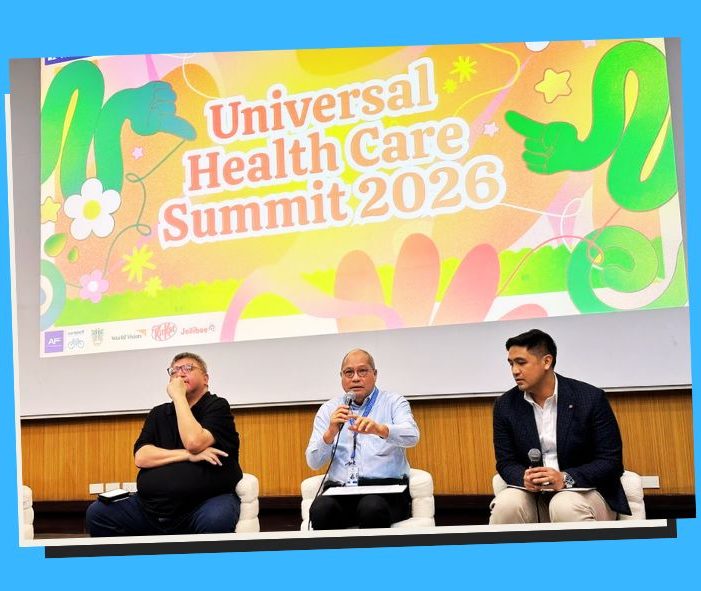
Breaking the Silos: UHC Summit 2026 Champions Multi-Disciplinary Solutions for Philippine Health
The UHC Summit 2026 at Ateneo de Manila University brought together youth leaders and top health experts to redefine Universal Health Care as a collective, multi-sectoral endeavor.
Beyond Medicine: Why Lawyers, Economists, and Tech Experts are Key to the Future of Philippine Health
On March 14, 2026, the Escaler Hall at Ateneo de Manila University became the epicenter of a transformative dialogue on the future of Philippine healthcare. The Universal Health Care (UHC) Summit 2026, co-presented by the Rosita G. Leong Primary Healthcare Hub (RGL Hub) and Project LAAN, gathered a diverse cohort of senior high school and college students to challenge a long-standing myth: that health is a “siloed” issue reserved only for doctors.
Under the evocative theme, “From Roots to Branches: Interweaving Disciplines for a Healthier Tomorrow,” the summit highlighted that the path to true health equity requires the combined genius of lawyers, economists, engineers, and artists. By moving beyond traditional boundaries, the event set the stage for a more holistic, resilient, and inclusive national health system. 🏥
The RISE Mission: A Roadmap for Trust
The summit opened with a powerful keynote from Dr. Edwin Mercado, President and CEO of PhilHealth. He introduced the “RISE Mission”, a strategic 30-month roadmap designed to rebuild institutional capacity and public trust “30 days at a time.” By breaking down massive systemic reforms into manageable monthly milestones, PhilHealth aims to improve administrative efficiency and provider relations. Dr. Mercado’s message was clear: building a healthier Philippines is a marathon of manageable steps, and every profession, from law to economics, is invited to join the race.
Analyzing the Systemic Roots of Inequity
A high-level panel featuring Dr. Eduardo Banzon (ADB), Dr. Valerie Ulep (PIDS), and Dr. Cenon Alfonso (ASMPH) delved into the structural conditions that dictate health outcomes. Dr. Ulep urged the youth to look at the “systemic roots” of why some regions remain underserved, while Dr. Banzon emphasized the critical role of private-sector partnerships. The consensus was profound: health is a state of well-being shaped by the environment, the economy, and governance, rather than just the availability of a clinic.
Collaborative Innovation in Action
The afternoon transitioned from theory to practice. Parallel breakout sessions allowed students to explore how their specific fields, be it Management, Science and Technology, or the Humanities, intersect with health systems. This was followed by a hands-on workshop led by the RGL Hub. Participants were tasked with analyzing real-world case studies and proposing structural solutions to community health challenges.
A Collective Endeavor for the Future
The summit concluded with plenary presentations where student groups received direct feedback from the experts. The energy in the room affirmed the summit’s core conviction: Universal Health Care is a collective endeavor. As these young advocates return to their studies and communities, they carry a new perspective that, regardless of their future career path, they have a vital role to play in ensuring that quality healthcare is a right, not a privilege, for every Filipino. 🇵🇭
10 Benefits of a Multi-Disciplinary UHC Approach
- Holistic Policy Making: Incorporating legal and economic perspectives leads to more sustainable health laws.
- Technological Innovation: Engineers and IT specialists can bridge the “last-mile” gap through digital health solutions.
- Improved Governance: Management experts can streamline hospital administration and reduce bureaucratic waste.
- Economic Resilience: Financial analysts help optimize health spending to ensure funds reach the most vulnerable.
- Better Health Literacy: Educators and communicators can translate complex medical info into accessible community knowledge.
- Social Equity: Sociologists can identify and address the cultural barriers that prevent people from seeking care.
- Infrastructure Design: Urban planners can design cities that promote physical activity and reduce pollution-related illnesses.
- Legal Protection: Lawyers ensure that patient rights are upheld and that UHC mandates are strictly enforced.
- Data-Driven Decisions: Scientists and statisticians provide the evidence needed to allocate resources where they are most effective.
- Psychological Well-being: The humanities and arts play a role in addressing mental health and the human side of healing.
Costing
The UHC Summit 2026 emphasized that the “cost” of health is not just about the price of medicine. Discussions highlighted that investing in primary healthcare is significantly more cost-effective than treating advanced diseases in hospitals. While PhilHealth’s RISE Mission requires sustained institutional funding, the summit’s workshop proposals focused on community-driven solutions that utilize existing local resources, proving that smart governance and multi-sectoral collaboration can actually lower the national “bill” for healthcare over time.
Pros and Cons of Multi-Sectoral Health Reform
- Pro: Addresses the “Social Determinants of Health” (housing, education, etc.).
- Pro: Increases public trust through measurable monthly improvements (RISE Mission).
- Pro: Empowers the youth and diverse professionals to take ownership of health issues.
- Pro: Promotes private-public partnerships to bridge funding gaps.
- Pro: Encourages systemic thinking rather than “band-aid” solutions.
- Con: Coordinating between different government agencies can be slow and bureaucratic.
- Con: Requires a major shift in mindset for professionals accustomed to working in silos.
- Con: Balancing private sector interests with public health goals can be difficult.
- Con: Initial investments in infrastructure and training can be high.
- Con: Measuring the long-term impact of “social” interventions takes years of data collection.
Case Studies in Interwoven Health Solutions
- The RISE Roadmap: How PhilHealth is using 30-day milestones to overhaul administrative trust.
- Legal Aid for Patients: A look at how lawyers at the summit proposed protecting member rights in rural areas.
- Tech in the Sitios: Using science and technology to provide remote consultations in geographically isolated areas.
- The Economics of Equity: Dr. Valerie Ulep’s analysis of resource allocation across different socio-economic groups.
- ASMPH Governance Model: Dr. Cenon Alfonso’s insights on strong leadership as a driver for medical reform.
- Management in Medicine: How business students at the summit applied lean management to reduce clinic wait times.
- Education for Prevention: Case studies on using school curricula to reduce lifestyle-related diseases.
- The RGL Hub Proposals: A summary of the top student-led solutions for primary healthcare challenges.
- ADB Private Partnerships: How the Asian Development Bank integrates private logistics for vaccine distribution.
- Humanities in Healing: Using storytelling and the arts to combat the stigma associated with infectious diseases.
Key Takeaways
- The RISE Mission: PhilHealth’s focus is on measurable, 30-day improvements to build momentum.
- Silos are Out: achieving UHC is impossible without collaboration across all professional fields.
- Youth Advocacy: Students are recognized as active contributors and advocates for health equity.
- Well-being vs. Disease: Health is a broader state of well-being, not just the absence of illness.
- Primary Care Focus: The RGL Hub emphasizes the “roots” of health at the community level.
- Structural Roots: We must address the systemic causes of why some Filipinos have less access to care.
- Governance Matters: Strong institutional capacity is a primary driver of meaningful reform.
- Manageable Steps: Breaking big challenges into small pieces is the key to sustained progress.
- March 14, 2026: A landmark date for multi-disciplinary health dialogue at Ateneo.
- Equity for All: Every Filipino deserves an accessible and equitable health system. 🧬
Frequently Asked Questions
1. What is the UHC Summit 2026?
It is a flagship initiative of Project LAAN and the RGL Hub designed to engage students in Universal Health Care discussions.
2. What does the theme “From Roots to Branches” mean?
It symbolizes how healthcare “roots” (primary care and various disciplines) grow into the “branches” of a healthy society.
3. What is PhilHealth’s “RISE Mission”?
A roadmap for the next 30 months, focusing on making measurable improvements every 30 days to build trust and efficiency.
4. Who is Dr. Edwin Mercado?
He is the President and CEO of PhilHealth and the keynote speaker of the UHC Summit 2026.
5. How can a non-medical student contribute to UHC?
Through law (policy), economics (resource allocation), tech (telehealth), or education (awareness), among others.
6. Where was the event held?
At the Escaler Hall, Ateneo de Manila University, Quezon City.
7. What is the Rosita G. Leong Primary Healthcare Hub?
A hub dedicated to strengthening primary healthcare through research, education, and community engagement.
8. What is Project LAAN?
A youth-led organization advocating for Universal Health Care and health literacy in the Philippines.
9. What are the “Social Determinants of Health”?
Non-medical factors like poverty, housing, and education heavily influence health outcomes.
10. How can I get involved?
Students and professionals are encouraged to advocate for health equity in their respective fields and communities.
Conclusion
The UHC Summit 2026 served as a powerful reminder that while the challenges facing the Philippine health system are vast, they are not insurmountable. By interweaving the expertise of different disciplines and empowering the youth to take an active role, the “RISE Mission” of PhilHealth and the collaborative spirit of Ateneo’s RGL Hub are planting the seeds for a healthier tomorrow. As the summit concluded, the message to the participants was clear: the future of Filipino health is in the hands of everyone, not just those in white coats.
Link Resources
- Official Ateneo de Manila University News – UHC Summit 2026
- PhilHealth Official Website – RISE Mission Updates
- Project LAAN Official Facebook Page
- Asian Development Bank (ADB) Health Sector Initiatives
Key Phrases
- UHC Summit 2026 Ateneo highlights
- PhilHealth RISE Mission 2026
- Multi-disciplinary approach to Universal Health Care
- Dr. Edwin Mercado PhilHealth keynote
- Project LAAN health equity advocacy
- Rosita G. Leong Primary Healthcare Hub initiatives
- Social determinants of health Philippines
- Student workshops on Universal Health Care
- Primary healthcare reform Philippines 2026
- Interweaving disciplines for health
Best Hashtags
#UHCSummit2026 #UniversalHealthCarePH #HealthEquity #Ateneo #PhilHealthRISE #ProjectLAAN #RGLHub #YouthInHealth #BayanihanForHealth #LeadMediaNews

Oliver Bugarin – A blog writer with over a decade of experience in WordPress website creation and management, and creating articles on lifestyle, travel, technology, business, finance, and wellness. He is known for producing clear, engaging articles that resonate with readers and add value to any blog or website.
Contact him for collaborations or content writing opportunities. Facebook – LinkedIn
.
Save/Share this story with QR CODE
Disclaimer
This article is for informational purposes only and does not constitute endorsement of any specific technologies or methodologies and financial advice or endorsement of any specific products or services.
Contact Lead Media News
📩 Feel free to Contact Lead Media News for suggestions, collaborations, reviews, or anything else.





