Space-Based Signal: Globe and Starlink Eliminate “Dead Zones” in the Philippines
In a historic leap for digital inclusion, the DICT has partnered with Globe and Starlink to launch Southeast Asia’s first Direct-to-Cell service. Ordinary smartphones can now access calls and data directly from space, bypassing the need for traditional cell towers.
The Satellite Revolution: Direct-to-Cell in the Philippines
The Philippines has officially become the first country in Southeast Asia and only the second in Asia to roll out Direct-to-Cell (DTC) satellite technology. Announced in early 2026, the landmark partnership between Globe Telecom and SpaceX’s Starlink, fully supported by the Department of Information and Communications Technology (DICT), marks a paradigm shift in how an archipelagic nation stays connected. 🇵🇭📡
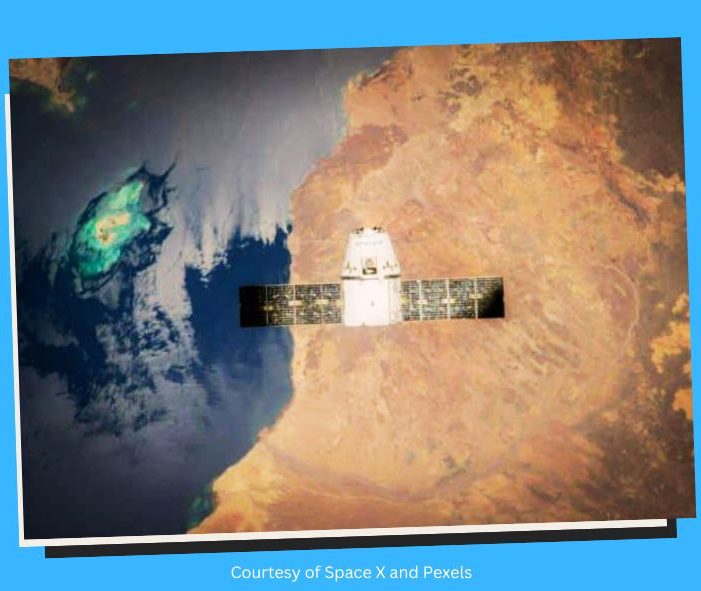
Unlike traditional satellite internet that requires a bulky “dish,” this next-generation tech allows unmodified LTE mobile phones to connect directly to a constellation of over 650 low-Earth orbit (LEO) satellites. By acting as “cell towers in space,” these satellites provide voice, text, and data services in areas where ground-based infrastructure is physically impossible or too costly to build.
Why It Matters: Geography and Resilience
For a nation of over 7,600 islands, the “tower-less” approach is more than a convenience, it’s a necessity. Traditional towers cover approximately 97% of the population, but the remaining 3% live in Geographically Isolated and Disadvantaged Areas (GIDAs). 🏝️⛰️
Moreover, the Philippines faces an average of 20 tropical cyclones annually. During extreme weather, terrestrial fiber lines and cell sites are often the first to fail. With satellite-to-phone connectivity, the signal is “disaster-proof,” providing a critical lifeline for first responders and families in the wake of natural calamities. As DICT Secretary Henry Aguda stated, this technology will be “critical in times of disasters when communication can mean the difference between life and death.”
10 Benefits of Direct-to-Cell Technology
- Universal Coverage: Reaches 100% of the Philippines, including the most remote mountains and islets.
- Hardware Compatibility: Works with existing standard LTE smartphones; no new devices or SIM cards are required.
- Disaster Resilience: Signal remains active even if ground-based towers are destroyed by typhoons or earthquakes.
- Economic Inclusion: Enables farmers and fishers in remote areas to access digital markets and weather updates.
- No Infrastructure Needed: Eliminates the environmental and financial cost of building towers in protected or rugged terrain.
- Seamless Roaming: The phone automatically switches to satellite mode when terrestrial signal is lost (roaming mode enabled).
- Government Services: Facilitates access to the eGov App and other digital public services in GIDAs.
- Scalable IoT: Supports Internet-of-Things devices for smart agriculture and environmental monitoring in the wild.
- Low Latency: LEO satellites orbit at approximately 550 km, providing much faster response times than traditional geostationary satellites.
- Global Positioning: Elevates the Philippines as a primary tech testbed alongside markets like Japan, Australia, and the USA.
Pros and Cons of Satellite-to-Phone Connectivity
Pros
- Closes the “Digital Divide” for the last 3% of the unserved population.
- Enhances national security and emergency response coordination.
- Highly inclusive: designed to be more affordable than traditional satellite phones.
- Backed by Globe’s massive $1 billion CAPEX for 2026.
- Uses advanced phased-array antennas for seamless integration with existing 4G/LTE networks.
Cons
- Line of Sight: Requires a clear view of the sky; performance may drop inside thick concrete buildings or heavy foliage.
- Weather Sensitivity: While resilient, extreme atmospheric conditions (heavy rain) can still attenuate signals.
- Speed Limits: Initial data speeds may be lower than terrestrial 5G/Fiber connections.
- Battery Drain: Searching for and maintaining a satellite link can be more taxing on mobile batteries.
- Capacity Issues: Shared bandwidth among many users in a single satellite “cell” could lead to congestion during peak times.
Use Cases for a Connected Archipelago
- Mountain Rescues: Hikers in “dead zones” can now send SOS texts and GPS coordinates via satellite.
- Maritime Safety: Small-scale fisherfolk can check weather alerts and call for help even miles away from the coast.
- Rural Education: Students in remote barangays can access online learning modules without waiting for a local tower.
- Typhoon Coordination: Relief teams can communicate in real-time even if the entire regional power and telco grid is down.
- Smart Agriculture: Soil sensors in inland farms can transmit data directly to the cloud via Starlink satellites.
- E-Wallet Access: Residents in remote islands can finally use GCash or Maya for day-to-day transactions.
- Telemedicine: Rural health units can consult with specialists in Manila via satellite video calls.
- Logistics Tracking: Cargo ships and trucks passing through “black holes” can maintain continuous tracking.
- Wildlife Monitoring: Conservationists can track endangered species in deep forests using satellite-linked tags.
- Digital Nomadism: Exploring the “hidden gems” of the Philippines becomes viable for remote workers who require 24/7 connectivity.
Key Take Aways
- Partnership: A landmark deal between Globe Telecom and Starlink (SpaceX).
- First in SEA: The Philippines leads Southeast Asia in Direct-to-Cell adoption.
- Device Ready: Works with standard LTE phones; no special hardware or apps needed.
- Satellite Count: Powered by a constellation of over 650 LEO satellites.
- Launch Timeline: Initial testing and proof-of-concept in H1 2026.
- Economic Impact: Backed by a $1 billion investment from Globe.
- Disaster Strategy: Acts as a “resilient backup layer” during natural calamities.
- Target Areas: Geographically Isolated and Disadvantaged Areas (GIDAs).
- Subscriber Base: Will benefit Globe’s 63.1 million subscribers.
- Global Context: The PH joins a shortlist of 8 countries (including USA, Japan, Australia) with this tech.
FAQs
- Do I need to buy a Starlink dish?
- No. This service connects your existing smartphone directly to the satellite.
- Will I need a new SIM card?
- No. Your existing Globe SIM will work.
- Is it free?
- Pricing hasn’t been finalized, but Globe promises it will be “very inclusive” and cheaper than traditional sat-phones.
- Can I use it indoors?
- It works best with a clear view of the sky; performance indoors may be limited.
- Does it support 5G?
- It is primarily designed for 4G/LTE connectivity.
- When will it be available?
- Testing starts in early 2026, with a rollout expected throughout the year.
- How do I turn it on?
- You usually just need to enable Roaming on your phone when out of tower range.
- Can I make video calls?
- Yes, the tech supports voice, data, video, and messaging.
- Will it work during a typhoon?
- Yes, that is one of its primary design goals, to provide signal when towers are down.
- Is this available for other networks?
- Currently, it is an exclusive partnership between Globe and Starlink in the Philippines.
Conclusion
The arrival of Satellite-to-Phone technology in 2026 marks the end of the “dead zone” in the Philippines. By turning the sky into a network of cell towers, the Globe-Starlink partnership ensures that geography is no longer a barrier to opportunity or safety. As we enter this new era, the Philippines doesn’t just catch up with the world, it leads the region into a future where every Filipino, from the peaks of the Cordilleras to the shores of Tawi-Tawi, is truly connected. 🚀🇵🇭
Link Resources
- DICT Official Announcement on Globe-Starlink Partnership
- Globe Telecom: Direct-to-Cell Technology Overview
- Starlink Direct to Cell Official Page
- Official Gazette: Digital Inclusion Initiatives
- SpaceX: The Future of Mobile Connectivity
Key Phrases
- Philippines first SEA country satellite-to-phone 2026
- Globe Starlink Direct-to-Cell partnership details
- DICT Secretary Henry Aguda satellite connectivity
- Standard LTE phone satellite access Philippines
- Disaster resilient communication Starlink Globe
- Cell tower in space technology Philippines
- Connecting unserved and underserved communities 2026
- Globe $1 billion investment satellite tech
- Low-earth orbit satellites for mobile phones
- PH as global testbed for satellite LTE
Best Hashtags
#SatelliteToPhone #GlobeStarlink #DirectToCell #DigitalInclusionPH #ConnectivityPH #StarlinkPhilippines #DICT #BagongPilipinas #TechInnovation #NoDeadZones

Oliver Bugarin – A blog writer with over a decade of experience in WordPress website creation and management, and creating articles on lifestyle, travel, technology, business, finance, and wellness. He is known for producing clear, engaging articles that resonate with readers and add value to any blog or website.
Contact him for collaborations or content writing opportunities. Facebook – LinkedIn
.
Save/Share this story with QR CODE
Disclaimer
This article is for informational purposes only and does not constitute endorsement of any specific technologies or methodologies and financial advice or endorsement of any specific products or services.
Contact Lead Media News
📩 Feel free to Contact Lead Media News for suggestions, collaborations, reviews, or anything else.





