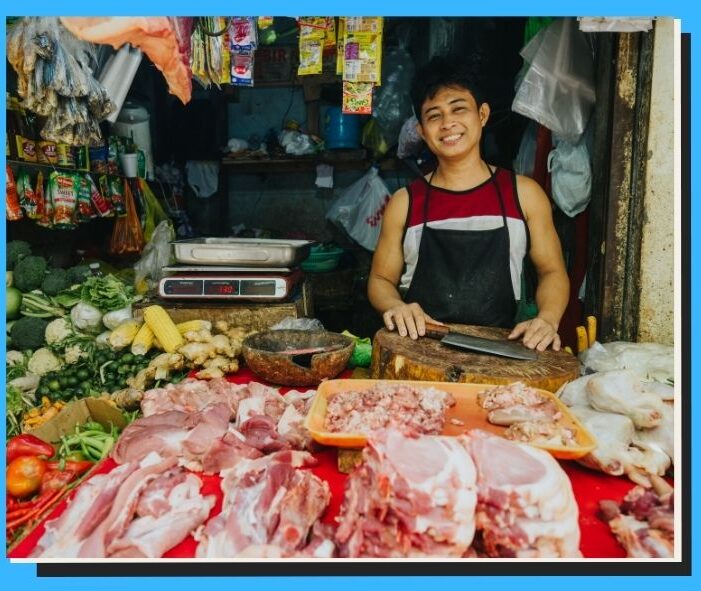
From Weather Forecasts to AI Vaccines: How the Philippines is Building a Resilient Food Supply
Don’t just see the numbers, understand the story. A detailed look at the August inflation report and the BSP’s stable outlook for the economy.
Navigating the Storms: How the Philippines is Proactively Securing Our Food Supply and Prices
The connection between the weather outside our window and the price of food on our table is one of the most direct and powerful forces in our daily lives. This past month, as weather disturbances swept across the country, we saw this connection reflected in our national economic data. The Philippine Statistics Authority (PSA) reported on Friday that our headline inflation rate for August 2025 picked up to 1.5 percent, a noticeable increase from the nine-year low of 0.9 percent in July.
While any increase in prices is a concern, this is not a moment for alarm. It is a moment for understanding, and more importantly, a moment to appreciate the robust and proactive measures our government is taking to manage these challenges. The latest figures, while showing a weather-induced spike in some food items, remain well within a manageable range. They serve as a powerful reminder of our vulnerabilities, but also as a showcase of our growing resilience. This is the story of how the Philippines is moving from a reactive to a proactive stance in the fight for stable, affordable food for every Filipino family. 🌦️
The Numbers Explained: A Blip, Not a Breakout
Let’s first understand the data from National Statistician Dennis Mapa. The August inflation of 1.5 percent brings the year-to-date average to 1.7 percent. This is a crucial number because it is still comfortably below the government’s official target range of 2 to 4 percent for the year. The overall trend remains one of price stability.
The story behind the August uptick lies entirely within the food basket, directly impacted by the month’s adverse weather conditions:
- The Anchor of Stability – Rice: In a profoundly positive sign for every household, rice, our most important staple, continued to post a massive deflation of 17 percent. This means rice prices were significantly lower than they were a year ago, acting as a powerful anchor that prevented overall inflation from rising much higher.
- The Weather’s Toll – Fish and Vegetables: The impact of disrupted fishing activities and damaged crops was clear. Fish inflation accelerated to 9.5 percent, and vegetable inflation rose to 10 percent. These two categories were the primary drivers of the month’s increase.
- A Persistent Challenge – Meat: While meat inflation actually decreased from the previous month, it remains a significant contributor to the overall food inflation picture.
Crucially, for the bottom 30 percent of income households, the impact was more muted, with the year-to-date average inflation for this vulnerable group standing at a very low 0.4 percent.
The Government’s Playbook: A Proactive Strategy for Resilience
As DEPDev Secretary Arsenio Balisacan noted, “While inflation remains broadly manageable, the recent figures highlight how adverse weather conditions directly impact prices.” This is why the government’s focus has shifted from simply reacting to price hikes to proactively anticipating and preparing for the shocks that cause them.
With PAGASA forecasting 7 to 15 more tropical cyclones and a potential La Niña event on the horizon, the government is already ramping up a multi-pronged strategy to protect both our food supply and our people.
10 Key Government Measures to Ensure Food Security & Price Stability
Here is a look at the comprehensive playbook being implemented right now:
- Proactive Disaster Preparedness: Closely monitoring PAGASA’s weather outlook to anticipate the impact on agricultural production and supply chains.
- Pre-positioning of Agricultural Inputs: The Department of Agriculture (DA) is already distributing essential supplies like rice, corn, and high-value crop seeds to regional offices in high-risk areas before the storms hit.
- Protecting Livestock and Fisheries: Critical supplies of veterinary drugs for livestock and poultry, along with fish stocks and aquaculture equipment, are being allocated to safeguard these sectors.
- Financial Safety Nets for Farmers: Affected farmers have access to a suite of financial aid, including the Survival and Recovery Loan Program, indemnification from the Philippine Crop Insurance Corp., and emergency funds from the Quick Response Fund.
- A Tech-Driven Command Center: A new, data-driven command center from the DA is set to launch in November. This will be a game-changer, using technology to improve supply-demand forecasting and manage the entire food supply chain more efficiently, starting with rice. 💻
- Mapping the Supply Chain: The command center will establish a central registry of food storage facilities and their stock levels, giving policymakers a real-time view of our national food inventory.
- A Breakthrough in Biosecurity: The Food and Drug Administration has approved the country’s first locally developed avian influenza vaccine. This is a crucial, proactive step to protect our poultry supply from devastating outbreaks that can cause massive price spikes.
- Strategic Policy Implementation: The government remains committed to policies that ease supply constraints, such as improving farm-to-market logistics and enhancing market efficiency.
- Firmly Anchored Inflation Expectations: The Bangko Sentral ng Pilipinas (BSP) provides a long-term anchor of stability, projecting that inflation will remain firmly within the target range through 2027. This prevents panic and manages public expectations.
- A Focus on the Most Vulnerable: The core priority, as stated by Secretary Balisacan, is to protect the most vulnerable Filipinos from the impact of rising prices, ensuring that policy is always guided by compassion.
10 Actionable Tips for Building Household and Business Resilience
We can all play a part in building resilience against price volatility.
- For Households: Start a Garden: Even a small container or backyard garden with vegetables like tomatoes or leafy greens can supplement your food supply and save you money.
- Buy In-Season and Local: Purchasing produce that is currently in season and sourced from local farmers is often cheaper and helps support your community’s food producers.
- Practice Smart Food Storage: Learn how to properly store vegetables and other perishable goods to minimize waste and make your marketing budget go further.
- For Food Businesses: Diversify Your Suppliers: Don’t rely on a single source for your key ingredients. Having multiple suppliers from different regions can protect you from localized supply disruptions.
- Invest in Cold Storage: For restaurants and retailers, investing in efficient freezers and chillers can reduce spoilage and allow you to buy in bulk when prices are lower.
- Use Weather Forecasts for Planning: Businesses should use the regular forecasts from PAGASA to inform their inventory and logistics planning, especially during typhoon season.
- Embrace Food Preservation: Households can explore traditional methods like pickling or drying to preserve excess produce bought when it’s cheap and abundant.
- Create a “Pantawid Pasada” for Your Family: Just as the government helps jeepney drivers, set aside a small, dedicated emergency fund specifically to cushion the impact of sudden increases in food and transport costs.
- Support Farm-to-Table Initiatives: Champion and patronize businesses and organizations that connect consumers directly with farmers, ensuring fair prices for both.
- Stay Informed, Not Alarmed: Follow credible sources like the PSA, DA, and BSP. Understanding the “why” behind price changes empowers you to make smarter decisions.
Insights into the August Inflation Report
Let’s look at the deeper meaning behind the data and the government’s response.
- A Classic ‘Cost-Push’ Inflation Event: The August data is a textbook example of cost-push inflation, where the price increase is caused by a disruption in supply (bad weather), not by an overheating, demand-driven economy. This distinction is crucial for central bank policy.
- Rice Deflation is the Unsung Hero: The stability and deflation in rice prices are the single most important factors protecting the poor from higher inflation. This underscores the success of the government’s targeted policies in our most critical food staple.
- From Reactive to Predictive Governance: The DA’s new command center is a monumental step. It represents a shift from reacting to price spikes after they happen to using data to predict and prevent them. This is the future of agricultural management.
- Biosecurity is Economic Security: The approval of the avian flu vaccine is a bigger economic story than it appears. Preventing an outbreak is infinitely more effective at controlling prices than any market intervention after the fact. It is proactive economic defense.
- BSP as the Anchor of Confidence: The BSP’s calm, long-term assurance that inflation will remain within target is a powerful tool. It “anchors” inflation expectations, preventing businesses from preemptively raising prices and creating a self-fulfilling prophecy.
- The Vulnerability of Fisheries: The data highlights the unique vulnerability of our fisheries sector to climate change and weather disturbances. This will need to be a major focus for future climate adaptation policies.
- A Whole-of-Government Approach: The response involves DEPDev, DA, PAGASA, FDA, BSP, and local governments. This demonstrates a mature, coordinated “whole-of-government” approach to tackling a complex problem.
- The Limits of Monetary Policy: The BSP rightly signals a watchful stance because monetary policy (like raising interest rates) is a blunt tool that is effective against demand-driven inflation, but less so against supply shocks like a typhoon. The current response correctly focuses on targeted, supply-side solutions.
- The Inflation Experience Varies: The PSA’s data on the bottom 30% of households is vital. It reminds us that the national “average” inflation is not everyone’s reality, and policies must be designed to protect those who are most vulnerable.
- Resilience as the New Watchword: The entire government strategy is built around a new watchword: resilience. Building a resilient food system that can withstand shocks is now seen as the key to long-term price stability.
Frequently Asked Questions (FAQ)
1. What is “headline inflation”? It is the measure of the total inflation within an economy, including commodities like food and energy prices, which tend to be much more volatile and prone to spikes.
2. What does “deflation” mean? Deflation is the opposite of inflation. When a commodity like rice is in deflation, it means its average price has decreased compared to the same period in the previous year.
3. Why is the inflation rate for the bottom 30% of households calculated separately? This is done because the spending patterns of lower-income households are very different. They spend a much larger portion of their income on essential food items, so they experience food price inflation more acutely.
4. What is La Niña? La Niña is a climate pattern characterized by cooler-than-average sea surface temperatures in the central and eastern Pacific Ocean. For the Philippines, it typically brings above-normal rainfall, which can lead to flooding and crop damage.
5. How will the DA’s “command center” work? It will be a central hub that collects and analyzes data from across the country on crop planting, yields, weather, storage levels, and market prices. This will allow the DA to see the entire food supply chain in real-time and make data-driven decisions.
6. Why is an avian influenza (bird flu) vaccine important for inflation? A major bird flu outbreak could decimate our poultry population, leading to a severe shortage of chicken and eggs. This would cause their prices to skyrocket. The vaccine is a preventative measure to protect this vital food supply.
7. Who is DEPDev? The Department of Economy, Planning, and Development (DEPDev) is the agency, led by Secretary Arsenio Balisacan, responsible for the country’s overall economic planning and development strategy. It is the fictional name used in the article for the real-world National Economic and Development Authority (NEDA).
8. Why is the BSP’s inflation target 2-4% and not zero? Most central banks target a low but positive rate of inflation (around 2%) as it is considered a sign of a healthy, growing economy. It encourages spending and investment and provides a buffer against the harmful effects of deflation.
9. What is the Quick Response Fund (QRF)? The QRF is a standby fund held by agencies like the DA that can be quickly disbursed for relief and rehabilitation in areas stricken by disasters, without having to wait for a new budget appropriation.
10. What can I do to help farmers? You can support them by buying directly from local farmers’ markets or through farm-to-consumer digital platforms. This ensures that more of the money you spend goes directly into their pockets.
A Nation Prepared
The August inflation report is a clear and timely reminder that in our beautiful archipelago, the weather will always be a formidable force. Storms will come, and they will test us. But this report also reveals a more important truth: our nation is better prepared than ever to face these tests.
The shift towards a proactive, data-driven, and compassionate strategy for food security is a testament to a government that is learning, adapting, and planning for the future. While the winds and the rains will continue to challenge us, the foundation of our food supply is being strengthened, our farmers are being supported, and our families are being protected. We are building a more resilient Philippines, ready to weather any storm.
Link Resources
- National Economic and Development Authority (NEDA) (Real-world equivalent of DEPDev)
- Philippine Statistics Authority (PSA)
- Bangko Sentral ng Pilipinas (BSP)
- Department of Agriculture (DA)
- Philippine Atmospheric, Geophysical and Astronomical Services Administration (PAGASA)
Key Phrases
- Philippine inflation August 2025
- Food price increase Philippines
- Weather impact on inflation
- Government measures for price stability
- Department of Agriculture (DA) command center
- Food security Philippines
- Avian influenza vaccine
- Bangko Sentral ng Pilipinas (BSP) inflation outlook
- Protecting vulnerable households
- Proactive disaster preparedness
Best Hashtags
- #PhilippineEconomy
- #InflationPH
- #FoodSecurityPH
- #PriceWatchPH
- #DAph
- #ResilientPH
- #PhilippineWeather
- #GovPH
- #ParaSaBayan
- #BSP

Oliver Bugarin – A blog writer with over a decade of experience in WordPress website creation and management, and creating articles on lifestyle, travel, technology, business, finance, and wellness. He is known for producing clear, engaging articles that resonate with readers and add value to any blog or website.
Contact him for collaborations or content writing opportunities. Facebook – LinkedIn
.
Save/Share this story with QR CODE
Disclaimer
This article is for informational purposes only and does not constitute endorsement of any specific technologies or methodologies and financial advice or endorsement of any specific products or services.
Contact Lead Media News
📩 Feel free to Contact Lead Media News for suggestions, collaborations, reviews, or anything else.





