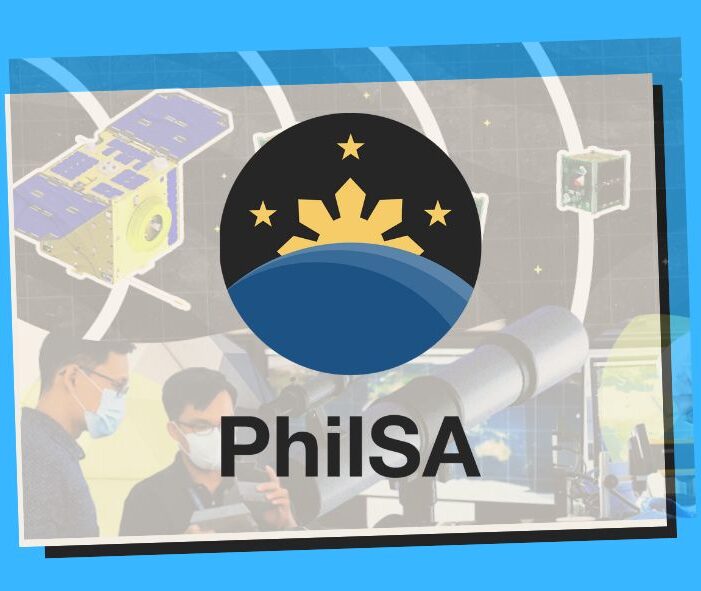
Philippines and Japan Launch Partnership for Satellite Innovation
Discover why Japan believes in the potential of Philippine space scientists.
🌌 Pushing Philippine Space Technology to New Heights: A New Era of Innovation and Partnership 🚀🇵🇭
In a historic development that reaffirms the Philippines’ commitment to digital transformation and innovation, President Ferdinand Marcos Jr. announced a strengthened partnership between the Philippine Space Agency (PhilSA) and Japan Aerospace Exploration Agency (JAXA). The partnership aims to bolster the Philippines’ space capabilities, particularly in applying satellite technology for disaster response, agricultural planning, public safety, and more.
During his recent state visit to Japan, the President emphasized that space technology is not a luxury but a necessity. In a country where natural disasters are common and agriculture remains a livelihood for millions, the need for precise data, rapid communication, and timely intervention is more urgent than ever.
“With better satellites, we can track typhoons and respond to disasters more quickly, help our farmers plan smarter, and keep our communities safer,” said President Marcos Jr.
A Launchpad for National Progress
While other nations in Asia have long explored the stars, the Philippines’ journey into space officially began in 2019 with the signing of the Philippine Space Act (Republic Act 11363). This landmark legislation established a national space policy and created PhilSA as the primary agency responsible for steering the country toward becoming a space-faring nation by 2030.
The policy is built upon six key pillars:
- National Security and Development
- Hazard Management and Climate Studies
- Space Research and Development
- Space Industry Capacity Building
- Space Education and Awareness
- International Cooperation
This framework is not only ambitious but also pragmatic, recognizing that space technology must serve people on the ground first, especially the most vulnerable.
🇯🇵 Japan: A Proven Ally in the Philippines’ Space Journey
Long before PhilSA was formally established, Japan was already playing a critical role in the country’s space program. In 2016, Japan helped launch Diwata-1 and Diwata-2, the Philippines’ first microsatellites, into orbit through the International Space Station (ISS). These satellites collected valuable data for disaster risk management, environmental monitoring, and agriculture.
This was followed by the launch of the Maya series of nanosatellites, or CubeSats — smaller, more affordable, and faster to develop than their predecessors. These satellites proved vital in testing new technologies, engaging Filipino scientists, and building domestic capacity.
As PhilSA Director General Joel Marciano Jr. explained,
“Through hands-on development of small satellites, we not only build valuable capabilities but hopefully also bring inspiration to young people to create impactful innovations.”
The Regional Space Race: Where Does the Philippines Stand?
Compared to its Southeast Asian neighbors, the Philippines is still catching up. According to recent data:
- Indonesia leads with 19 satellites
- Singapore follows with 18
- Thailand: 12
- Malaysia: 9
- Vietnam: 3
- Philippines: 2
Despite being behind in quantity, the Philippines is investing wisely in quality partnerships and educational development to close the gap, starting with Japan and continuing through homegrown initiatives such as STAMINA4Space.
Benefits of a Strong Philippine Space Program
- Enhanced Disaster Preparedness – Real-time satellite data aids evacuation and rescue.
- Agricultural Planning – Precision farming through remote sensing.
- National Security – Satellite surveillance improves border and coastal protection.
- Environmental Monitoring – Track deforestation, pollution, and marine ecosystems.
- Education & Research – Boosts STEM education and local expertise.
- Economic Growth – Opens doors to space tech industries and jobs.
- Global Competitiveness – Places the Philippines on the space innovation map.
- Telecommunication Expansion – Improved internet and broadcasting in rural areas.
- International Collaboration – Builds diplomatic and technological ties.
- Inspiration for Youth – Encourages the next generation to pursue science and tech careers.
Tips for Accelerating the Space Sector
- Strengthen government funding and policy continuity.
- Develop more university-led satellite research centers.
- Create scholarships and training programs for space science.
- Establish local manufacturing and testing facilities.
- Engage private companies in commercial space initiatives.
- Utilize satellite data in local governance and planning.
- Promote public awareness and science communication.
- Host national competitions for student-built CubeSats.
- Partner with ASEAN and Indo-Pacific neighbors.
- Celebrate local space achievements widely to build momentum.
Insights That Show Why Space Tech Matters Now
- Climate change is intensifying—satellite tracking is vital for resilience.
- Food security needs data—space helps optimize crop planning.
- Young talent needs direction—space can be their North Star.
- Innovation comes from challenge—funding space is strategic, not optional.
- The private sector is ready—they just need government support.
- Japan’s long-term commitment proves trust and partnership.
- Smaller satellites mean faster, more cost-effective missions.
- Asia-Pacific is booming in space investments—PH must claim its share.
- Diwata and Maya prove we have the talent—now we need scale.
- Space is not far away—it’s the solution above us.
Frequently Asked Questions (FAQ)
1. What is PhilSA’s role?
PhilSA is the main agency in charge of implementing the Philippine space policy.
2. How does space technology help farmers?
It allows for remote sensing to detect soil conditions, crop health, and weather patterns.
3. Is it expensive to launch a satellite?
Yes, but partnerships with Japan and CubeSat technology reduce costs significantly.
4. How do satellites help in disasters?
They provide real-time imagery and data to coordinate responses faster and more accurately.
5. What are CubeSats?
Miniature satellites, usually less than 10kg, are used for research, education, and tech testing.
6. Can students be involved in space programs?
Yes! Several universities participate in satellite development and testing.
7. Does the Philippines have launch capabilities?
Not yet. We currently rely on partners like Japan for launches.
8. What is STAMINA4Space?
A capacity-building program that trains engineers and scientists to build small satellites.
9. How many satellites does the Philippines currently have?
As of 2024, we have 2 operational satellites in orbit.
10. What’s the long-term vision for PH space tech?
To become a space-capable and space-faring nation by 2030.
Conclusion: The Sky Is No Limit
The Philippines’ space technology journey is proof that no dream is too distant when matched with vision, collaboration, and courage. With strong allies like Japan, homegrown talent from the STAMINA4Space program, and the steadfast guidance of PhilSA, the country is no longer just watching the stars — we’re reaching for them.
While challenges remain, the Philippines is now firmly on a trajectory toward a future powered by innovation, resilience, and unity. And just like the Diwata and Maya satellites, we too are rising.
🌍 The question now is not whether the Philippines will become a space-faring nation, but how soon.
Link Resources
- Philippine Space Agency – Official Website
- JAXA – Japan Aerospace Exploration Agency
- Republic Act 11363 – The Philippine Space Act
- STAMINA4Space Program
Key Phrases
- Philippine space agency
- PH-Japan space partnership
- small satellite development
- space technology in agriculture
- disaster response satellites
- Diwata and Maya satellites
- nanosatellite launch
- CubeSat training Philippines
- STAMINA4Space
- space tech for climate resilience
Best Hashtags
#PHSpaceTech
#PhilSA
#STAMINA4Space
#CubeSatsPH
#SpaceForGood
#DisasterResilience
#AgriTechPH
#InnovationNation
#JapanPHPartnership
#NextGenEngineers

Oliver Bugarin – A blog writer with over a decade of experience in WordPress website creation and management, and creating articles on lifestyle, travel, technology, business, finance, and wellness. He is known for producing clear, engaging articles that resonate with readers and add value to any blog or website.
Contact him for collaborations or content writing opportunities. Facebook – LinkedIn
.
Save/Share this story with QR CODE
Disclaimer
This article is for informational purposes only and does not constitute endorsement of any specific technologies or methodologies and financial advice or endorsement of any specific products or services.
Contact Lead Media News
📩 Feel free to Contact Lead Media News for suggestions, collaborations, reviews, or anything else.





