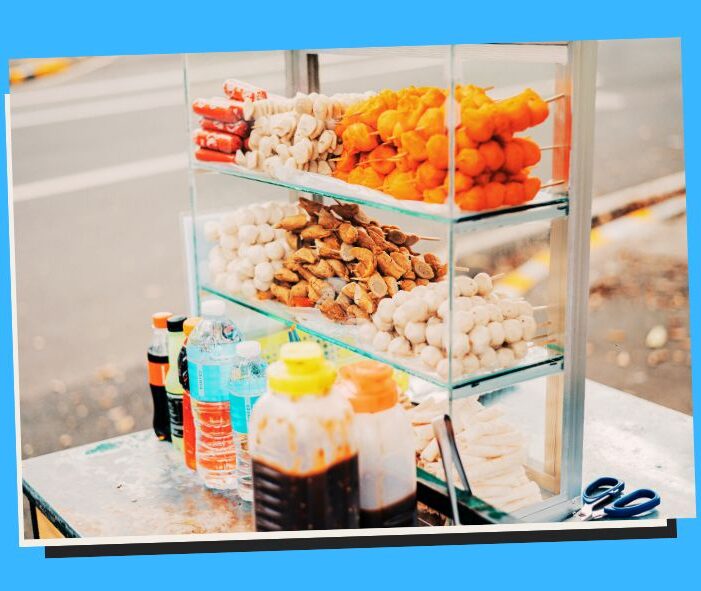
Why Filipino Street Food Isn’t Just Food; It’s a Cultural Experience
Get the juicy, crispy, and chewy details behind the Philippines’ favorite street bites.
🇵🇭 Filipino Street Food Icons and Their Origins: A Guide to Savoring Culture on a Stick 🌭🍢
Filipino street food is more than just a quick bite, it’s a culinary adventure rooted in history, regional identity, and a deep sense of community. Whether it’s grilled isaw sizzling over charcoal, a colorful halo-halo served from a street cart, or deep-fried kwek-kwek dipped in spiced vinegar, every dish tells a story.
This how-to guide will walk you through:
- The top street food icons in the Philippines 🍴
- Their fascinating origins and cultural roots 📜
- Amazing benefits of enjoying street food 🚀
- A step-by-step guide on how to explore Filipino street food like a local 🌍
- And more…
🧭 What Makes Filipino Street Food So Special?
Street food in the Philippines is everywhere; along sidewalks, in palengkes (wet markets), beside schools, jeepney terminals, and bustling night markets. But it’s not just about convenience. It’s about flavor, culture, and tradition.
Unlike high-end restaurants, street food reflects the real taste of the Filipino masses: affordable, innovative, and comfortingly familiar. And in every stick, cup, or paper plate, there’s a hint of history and identity.
🍢 Filipino Street Food Icons and Their Origins
Let’s take a closer look at the legends that define the Pinoy street food scene:
1. Isaw (Grilled Chicken/Pork Intestines) 🔥
Origin: Urban Manila, popularized in the ’70s and ’80s
Isaw is a triumph of Filipino nose-to-tail eating. Skewered, cleaned thoroughly, boiled, and grilled to smoky perfection, it’s best served with vinegar (sukang maanghang) or sweet chili sauce.
💡 Did you know? It’s also called “barbecue ng masa” due to its popularity among workers and students.
2. Kwek-Kwek (Quail Eggs in Orange Batter) 🟠
Origin: Manila sidewalk stalls in the early 2000s
These deep-fried, orange-coated quail eggs are eye-catching and addictive. The batter’s color comes from annatto (achuete) oil or food coloring, and they’re dunked in spicy vinegar or sweet sauce.
🐣 Pro tip: Try its bigger sibling, Tokneneng, made with chicken eggs!
3. Balut (Fertilized Duck Egg) 🥚🦆
Origin: Introduced by the Chinese during pre-Hispanic trade
Perhaps the most infamous Filipino street snack, balut is a fertilized duck egg with a partially developed embryo, typically eaten at 16-18 days old. It’s steamed, cracked open, and seasoned with salt or vinegar.
🥇 Fun fact: Balut was once considered an aphrodisiac and is a source of protein for night shift workers.
4. Fish Balls & Kikiam (Fried Snacks on a Stick) 🍡
Origin: Chinese-influenced, popularized by street vendors in Manila in the 1970s
Fish balls, squid balls, and kikiam are classic street cart staples. Boiled, fried, and skewered, they’re dunked in a variety of sauces: sweet, spicy, or vinegar-based.
🍥 Trivia: You can often hear “Fishball!” being shouted down the street as the vendor pushes their cart with a bike horn. It’s music to every merienda lover’s ears.
5. Betamax (Coagulated Chicken Blood) 🩸
Origin: Metro Manila during the early days of street grilling
Named after the VHS tape-like shape, betamax is grilled chicken blood served on a stick. It has a chewy texture and is often enjoyed with spicy vinegar.
📼 Cultural bite: This dish reflects the Filipino value of “walang sayang” (nothing wasted).
6. Taho (Silken Tofu with Syrup and Sago) 🍯
Origin: Brought by Chinese immigrants during the Spanish colonial era
This sweet, soft breakfast-in-a-cup consists of warm tofu, caramelized brown sugar syrup (arnibal), and tapioca pearls. The vendor’s signature call of “Tahooo!” is iconic in every neighborhood.
🕖 Best enjoyed early in the morning with the sunrise!
7. Halo-Halo (Mixed Shaved Ice Dessert) 🍧
Origin: Evolved from Japanese kakigōri in the 1920s
This colorful dessert combines shaved ice, evaporated milk, sweet beans, jellies, fruits, and leche flan. Originally sold at makeshift roadside stalls, halo-halo is now a summer classic.
🌈 Name meaning: “Halo-halo” literally means “mix-mix” in Filipino.
8. Manggang Hilaw (Green Mango with Bagoong) 🥭
Origin: Luzon, where unripe mangoes are abundant year-round
Street vendors slice green mango and serve it in a plastic cup with spiced bagoong (fermented shrimp paste). The sweet-sour-salty combo is unforgettable.
🔥 Kick it up: Some versions include chili for extra zing!
9. Turon (Banana Lumpia with Sugar and Jackfruit) 🍌
Origin: A Filipino-Spanish fusion snack popularized in the 20th century
This crispy dessert is made by wrapping saba banana and langka (jackfruit) in lumpia wrapper, rolling it in sugar, and deep-frying it. Sold on street corners, bus terminals, and schools.
🍭 Sweet note: Often cooked with caramelized sugar that forms a candy-like shell.
10. Mais Con Yelo (Sweet Corn with Shaved Ice) 🌽
Origin: Inspired by Spanish and American ingredients post-WWII
A sweet and refreshing treat with corn, milk, and crushed ice. Street versions are served in cups and topped with leche flan or cheese.
🧊 Perfect for beating the tropical heat!
✅ Benefits of Exploring Filipino Street Food
1. 🍽️ Affordable Delights
Street food is budget-friendly, often costing just ₱10-₱50 per item.
2. 🌍 Cultural Immersion
It’s the quickest way to understand Filipino culture and flavors.
3. ⏱️ Quick & Convenient
Grab a snack anytime, anywhere: ideal for commuters and students.
4. 🧑🍳 Supports Local Vendors
Every bite supports small businesses and hardworking vendors.
5. 📚 Culinary Education
You learn about native ingredients, cooking techniques, and regional influences.
6. 👪 Social Experience
Eating street food is often done in groups; bond with your barkada over fish balls!
7. 🚶 Perfect Food Tour
Walk your way through town while snacking. Every street corner has something new.
8. 🌱 Minimal Waste
Many snacks use the whole animal or minimal packaging, with less environmental impact.
9. 📸 Instagrammable Treats
Colorful, quirky, and photogenic, great for content creation!
10. 💛 Nostalgic Joy
Street food brings back childhood memories and simple joys.
🔍 How to Enjoy Filipino Street Food Like a Local
Step 1: Start Simple
Begin with familiar items like fish balls, taho, or turon. Once comfortable, try more adventurous ones like betamax or balut.
Step 2: Go with a Guide
Tag along with a local friend or join a street food walking tour to get the full experience: stories, etiquette, and vendor recommendations included.
Step 3: Ask Questions
Don’t be shy! Vendors love it when customers show interest. Ask about cooking methods, sauces, or origins.
Step 4: Try the Sauces
Filipino street food isn’t complete without sawsawan. Experiment with sweet, spicy, or vinegar dips.
🌶️ Pro tip: Ask for “konting anghang” if you’re new to spicy sauces.
Step 5: Bring Cash & Eco Containers
Most stalls are cash-only, and many accept coins. Bring a reusable container if you want to avoid plastic.
💡 Support vendors who use sustainable packaging!
Step 6: Mind Your Gut
Stick to busy stalls where the turnover is high and food is cooked fresh. Your tummy will thank you!
🧼 Also: Use alcohol or wipes before eating with your hands.
Step 7: Go Beyond Manila
Explore regional street food in Cebu, Davao, Bacolod, Iloilo, and Zamboanga. Each has its own unique flavor twist!
✅ Pros of Filipino Street Food
- Affordable and Accessible 💸
Whether you’re in Manila or a provincial town, street food is budget-friendly and easy to find. - Convenience on the Go 🏃♂️🍴
Perfect for busy commuters, students, or workers grabbing a quick bite. - Unique and Diverse Flavors 🍢
From sweet and sour to spicy and savory, there’s something for every palate. - Supports Local Vendors 🛍️
Buying from street stalls helps micro-entrepreneurs and boosts the local economy. - Cultural Experience 🎭
It’s not just food: it’s a communal, sensory experience that connects you to Filipino life. - Innovation in Simplicity 💡
Simple ingredients are transformed into culinary surprises, like quail eggs turned into kwek-kwek. - Perfect for Food Tourism 🌍
Street food is a must-try for visitors seeking authentic tastes of the Philippines. - Social Food 🧑🤝🧑
Eating on the street encourages bonding, people huddle around grills or share banana cue sticks. - Teaches Local History 📜
Many street foods have roots in colonial times, war survival, or indigenous practices. - Great for Events and Parties 🎉
Street food is now a staple in food parks, catering, and even weddings!
❌ Cons and Challenges
- Hygiene Concerns 🚫🧼
Not all vendors follow strict sanitary practices, posing food safety risks. - Unregulated Ingredients ⚠️
Some may use food coloring or additives without disclosure. - Nutritional Imbalance 🥓
Many are fried, salty, or sugary, delicious, but not always healthy. - Weather Dependent ☔
Rain can drive vendors away or limit street food availability. - Inconsistent Quality 🎲
Taste and preparation vary greatly between stalls. - Urban Pollution Exposure 🏭
Food sold near traffic-heavy areas can be exposed to smog and dust. - Lack of Licensing or Oversight 📝
Many stalls operate informally and are prone to shutdowns by authorities. - Short Shelf Life ⌛
Street food is best eaten fresh; leftovers often don’t keep well. - Gentrification Threats 🏢
Commercial development may displace long-time vendors. - Cultural Stigma 😶
Some still view street food as “low class,” despite its richness and popularity.
🧺 Case Studies: Filipino Street Food Icons and Their Origins
- Isaw (Grilled Chicken/Pork Intestines) 🔥
Origin: Born from the “nothing wasted” mentality, isaw showcases Filipino ingenuity. Marinated and charcoal-grilled to smoky perfection. - Kwek-Kwek (Battered Quail Eggs) 🧡
Origin: A modern creation from urban vendors, these deep-fried orange bites are dipped in spicy vinegar or sweet sauce. - Balut (Fertilized Duck Egg) 🥚
Origin: Introduced during Spanish colonization; once seen as a health tonic and aphrodisiac. - Fish Balls 🐟
Origin: Derived from Chinese fish cake traditions, now a staple with customizable dipping sauces. - Banana Cue 🍌
Origin: Post-war era innovation using saba bananas and caramelized sugar skewered on sticks. - Taho (Silken Tofu with Syrup and Sago) 🍯
Origin: Brought by Chinese settlers, taho has become a beloved morning treat across the Philippines. - Adidas (Chicken Feet) 🐔
Origin: Popularized in the 80s; named humorously after the sports brand due to its three “stripes” (toes). - Tokneneng (Battered Chicken Egg) 🍳
Origin: A variation of kwek-kwek using regular eggs; thought to have emerged in Manila’s school districts. - Turon (Banana Spring Roll) 🥠
Origin: Influenced by Chinese spring rolls, filled with bananas (and sometimes jackfruit), sugar, and fried crispy. - Betamax (Grilled Coagulated Blood) 🩸
Origin: A result of nose-to-tail cooking culture; its name comes from its resemblance to old Betamax tapes.
🧠 Key Takeaways
- Street food reflects Filipino resilience.
Built on resourcefulness and survival, many icons were born from necessity. - Each dish has a cultural story.
From colonial legacies to creative reinventions, every bite tells history. - Street food is democratic.
Everyone, rich or poor, eats street food. It’s a great cultural equalizer. - Simplicity doesn’t mean boring.
Basic ingredients + bold sauces = an explosion of flavor. - Street food is a gateway to local dialects and humor.
Names like “Adidas” or “Walkman” (pig ears) are uniquely Filipino in wit. - Preserving vendor stories is preserving culture.
Many vendors have been grilling, frying, or stirring for decades, unsung culinary heroes. - Street food adapts with time.
Vegan kwek-kwek? Air-fried fish balls? The innovation never stops. - You can travel the country through its streets.
Each region adds its own twist, like Ilonggo batchoy vendors or Cebu’s tuslob-buwa. - Street food festivals are gaining traction.
Cities are embracing and organizing events to showcase local eats. - It’s not just food. Its identity.
Street food is a living, breathing part of the Filipino cultural DNA.
❓ Frequently Asked Questions (FAQs)
1. Is Filipino street food safe to eat?
Yes, but always observe hygiene practices. Look for vendors with clean prep areas and lots of returning customers.
2. What’s the difference between kwek-kwek and tokneneng?
Kwek-kwek uses quail eggs, while tokneneng uses regular chicken eggs.
3. Why do some street foods have funny names like “Betamax” or “Adidas”?
Filipino humor and creativity! The names often describe the food’s appearance or texture.
4. Is street food only available in Metro Manila?
No! You’ll find unique regional street foods all over the country.
5. Can I make these dishes at home?
Absolutely. Many recipes are simple, and ingredients are easy to source in local markets.
6. Are there healthy street food options?
Yes, try taho, boiled corn, or grilled tofu (tokwa). Just go easy on the sauces!
7. How much does street food usually cost?
Prices range from ₱5 to ₱50 depending on the item and location.
8. What’s the best time to eat street food?
Late afternoon to early evening is prime time, but taho is typically sold in the morning.
9. Can I eat Filipino street food if I have dietary restrictions?
Yes, but ask vendors about ingredients. Vegetarian or vegan versions are becoming more common.
10. Is Filipino street food spicy?
Most aren’t by default, but sauces (especially suka or chili) can kick things up a notch!
✨ Conclusion
Filipino street food is a delicious gateway to the soul of the Philippines. From every sizzling stick of isaw to every chilled spoon of halo-halo, you’re not just eating, you’re experiencing culture, resilience, and creativity. 🇵🇭
So grab a skewer, dip it in sauce, and take a big bite of history. Whether you’re a first-time visitor or a balikbayan rediscovering your roots, there’s always a new snack to fall in love with.
Eat local. Support vendors. Taste culture. One bite at a time. 🍢🥭🍧
🔗 Link Resources
- National Commission for Culture and the Arts – Filipino Culinary Traditions – Historical background on food culture
- “Street Food: Asia” on Netflix (Philippines Episode) – A heartfelt look at vendors and dishes
- Heritage Food Blogs (e.g., Lutong Pinoy, Ang Sarap) – Deep dives into origins and recipes
- YouTube: Filipino Street Food Vlogs – Real-time eats from Quiapo to Davao
- “Kulinarya: A Guidebook to Philippine Cuisine” – Recognized resource for Filipino food history
🔑 Key Phrases
- Filipino street food
- History of isaw
- Where taho came from
- Pinoy food culture
- Kwek-kwek origins
- Balut explained
- Street vendors Philippines
- Iconic Filipino snacks
- Local food heritage
- Traditional street eats
📢 Best Hashtags
#FilipinoStreetFood
#SarapStreetStyle
#PinoyFoodCulture
#StreetFoodIconsPH
#TahoLove
#IsawNation
#KwekKwekChronicles
#BalutHistory
#LutongKalsada
#FoodHeritagePH

Oliver Bugarin – A blog writer with over a decade of experience in WordPress website creation and management, and creating articles on lifestyle, travel, technology, business, finance, and wellness. He is known for producing clear, engaging articles that resonate with readers and add value to any blog or website.
Contact him for collaborations or content writing opportunities. Facebook – LinkedIn
.
Save/Share this story with QR CODE
Disclaimer
This article is for informational purposes only and does not constitute endorsement of any specific technologies or methodologies and financial advice or endorsement of any specific products or services.
Contact Lead Media News
📩 Feel free to Contact Lead Media News for suggestions, collaborations, reviews, or anything else.





